Antarctic Ozone Hole Hits 10.5 Million Square Miles in 2026
Boulder-based scientists report the atmospheric gap reached its seventh-largest size since monitoring began in 1979 due to a strong polar vortex.
By Diego Mendoza ·
In the Southern Hemisphere, the protective layer of the atmosphere developed a gap of unusual size this year. The ozone hole over Antarctica peaked at 10.5 million square miles on Sept. 18. This measurement marks the seventh-largest single-day reading recorded since tests began in 1979.
The National Oceanic and Atmospheric Administration reported that the hole averaged 9.6 million square miles during the peak month, which spanned from early September to early October. For perspective, the largest single-day reading on record was 11.5 million square miles, measured in September 2000.
Scientists at the NOAA Global Monitoring Lab in Boulder co-lead the annual assessment of these atmospheric conditions. They attribute the 2026 expansion to an unusually powerful polar vortex. This weather system typically helps break up the vortex, but it was especially weak in August and September, allowing the depletion to persist.
Atmospheric ozone serves a vital role in shielding life on Earth from damaging ultraviolet rays. When this layer thins, humans and animals face increased risks of sunburns, skin cancer, and eye damage. The 2023 season also saw a spike caused by a South Pacific underwater volcano, which released hot water vapor into the sky.
Paul Newman, a senior scientist at NASA’s Goddard Space Flight Center in Maryland, noted that the hole has been forming later in the season in recent years. He said this timing indicates the ozone layer is healing. However, he added that the powerful polar vortex this season extended the depletion, allowing the hole to grow to proportions not seen in a decade.
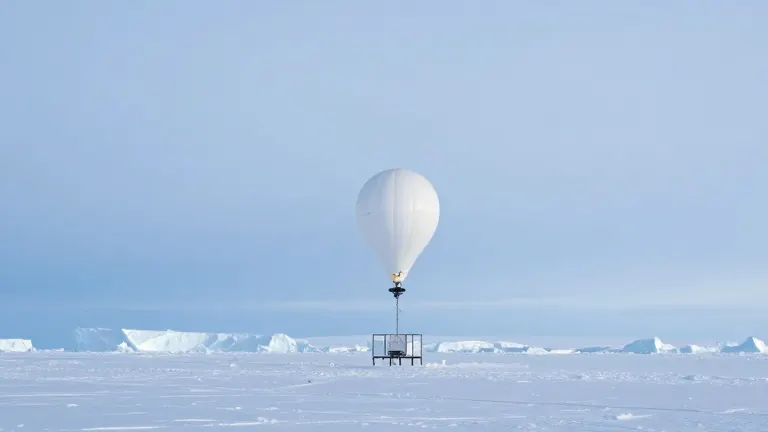
Boulder-based researchers play a hands-on role in gathering this data. Some senior scientists and lab technicians spend the winter at the Amundsen-Scott South Pole Station. There, they launch balloon-carried instruments known as ozonesondes. These devices take direct readings of ozone levels as they travel up through different layers of the atmosphere.
The ozonesonde used on American balloons was invented in Boulder in the 1960s. Companies in the city still manufacture the instruments today. Stephen Montzka, a NOAA senior scientist based in Boulder, emphasized that weather anomalies occasionally push the hole wider.
Montzka stated that the long-term trend shows the ozone hole slowly recovering. This recovery results from substantial declines in the concentrations of ozone-depleting gases. He noted that these gases are removed from the atmosphere only very slowly through natural processes, making the overall recovery a lengthy timeline.
International agreements have cut the use of damaging chemicals in aerosols, refrigeration, and foam propellants. Montzka added that progress will continue measurably if nations keep complying with these phase-out agreements. He said that once atmospheric concentrations of these gases drop below a certain point, ozone holes will no longer be seen, even with year-to-year weather variations.