Argo Space spacecraft loses power after solar array failure
The company's first water-propelled vehicle is now draining its battery, delaying tests of its unique propulsion system.
By Diego Mendoza ·
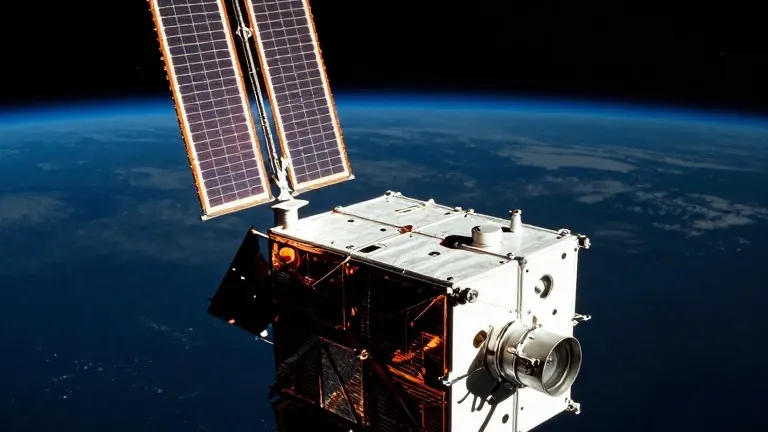
Denver-based space startup Argo Space faces an immediate power shortage on its first spacecraft. The vehicle, named Navigator, failed to deploy one of its two solar arrays during a July launch. Without full solar power, the spacecraft is currently consuming battery energy. This power deficit means engineers could not test the water propulsion system as planned.
The company was founded in late 2022 by Robert, Ryan, and Kirby Carlisle. The three brothers previously worked at SpaceX during the Falcon 9 era. They handled rocket launches, refurbishments, and sales. When they left to start their own business, they chose to build spacecraft rather than launch vehicles. Their goal is to create infrastructure in space using water as the primary fuel.
Water is abundant in the solar system and can potentially be harvested on the Moon. Robert Carlisle stated that the company is based on water. This substance serves multiple functions. It acts as a propellant, a coolant, and a radiation shield. Using water for cooling allows the spacecraft to devote more mass to fuel. This increases the vehicle's range and capability.
The company aims to build a transportation network connecting low-Earth orbit, geostationary orbit, and the Moon. This network would support logistics tasks like satellite resupply, refueling, and repairs. Robert Carlisle noted that water-based transport provides a commercial incentive to harvest fuel from the Moon's lower gravity well. This approach reduces reliance on propellants launched from Earth.
The Navigator mission flew in July aboard a Falcon 9 rideshare. Controllers established contact with the spacecraft successfully. However, the malfunction of the solar array prevented a full power generation. Teams spent approximately half a day troubleshooting the issue and collecting health data. The spacecraft remains power-negative, meaning it uses more energy than it produces.
Because the battery is draining, the team has not yet tested the propulsion system. The next step involves stabilizing the power situation to proceed with planned operations. The outcome of this troubleshooting phase will determine the next phase of the demonstration mission.
Source: Ars Technica