
Aspen landscaping firm uses AI to manage 70-person crew
Good Earth owner Jeff Margulies says new software tools help track job costs and reduce paperwork for field crews in the Roaring Fork Valley.
By Martin Reynolds ·
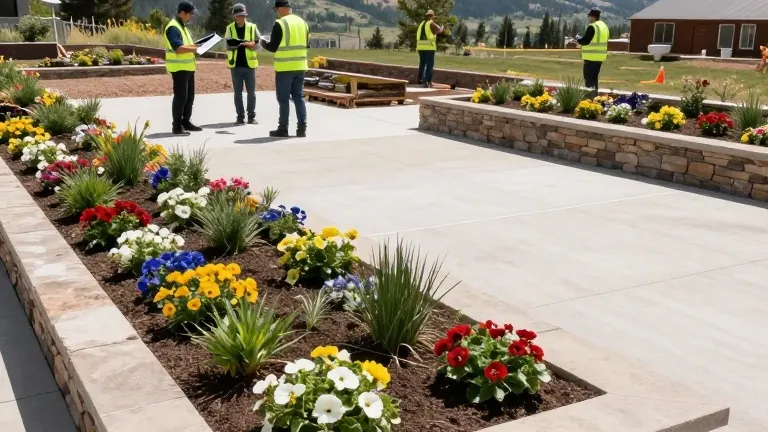
Jeff Margulies has spent the past year integrating artificial intelligence tools into his landscaping business in Aspen. The owner of Good Earth, a company that has grown to employ 60 to 70 people, says the new technology helps him manage the workforce and track project costs in real time.
Margulies, who took over the company in 2018, describes the process as "tickling the bots." He uses Claude AI within custom add-ons built for Aspire, his company's internal software. His brother, who previously ran a custom software development business with about 30 offshore developers, helped him identify where AI could streamline operations. Margulies says he is still figuring out the full potential of the tools but is already seeing benefits.
Good Earth provides services ranging from weekly mowing and garden care to full landscape installations and native plant management. Margulies notes that managing a small team is manageable through direct oversight. However, with 60 or 70 employees working in the field, he needs a system to ensure everyone is aligned and aware of issues early enough to correct them. The goal is to make sure every team member knows their tasks so the company can deliver on client promises.
The company requires employees to use their camera phones or tablets to take pictures of their work and to clock in and out of each project. Project managers update this data daily. They compare labor estimates against actual hours performed to gauge efficiency. This process provides real-time job cost information, allowing the company to see labor and material costs immediately and compare them to budgets. Margulies says this lets the company intervene quickly to fix problems instead of redoing work after a project is delivered.
Instead of having a human analyze all this data, Good Earth uses AI to process the information. The system generates checklists for field crews and identifies specific training needs to improve worker efficiency. It also allows employees to communicate with supervisors in real time if they have questions or if a project differs from the original plan.
Margulies is currently exploring about a dozen different AI initiatives. Some are for daily use, such as creating visual renderings of proposed work for clients. Others handle back-end processes and analysis that previously fell to employees who did not enjoy the tasks. The company historically did not use its worker output data fully, which limited its ability to manage crews effectively.
The deeper Good Earth goes with these AI tools, the more Margulies believes they can remove paperwork and reporting tasks. He describes data crunching as a weak skill set in the landscaping industry. By automating these tasks, the company can give employees more time for creative work and client interaction.
The adoption of AI in small businesses is a topic of discussion in Denver. Bijal Shah, CEO of the education technology company Guild, spoke at the recent DenAI Summit. She noted that healthcare costs in the country rise by 10% annually. Inflation adds another 5% pressure on wages, creating a 15% hurdle for employers. Shah said small businesses often use AI as an option to avoid layoffs rather than to replace workers entirely.
A study by Goldman Sachs found that 76% of small businesses are using AI. Of those, 87% said the technology augments rather than replaces employees. Shah advised that existing workers need training to develop critical thinking and judgment skills. She said employers need workers who can assess situations and make decisions, such as whether to shut down a production line or repair a machine.
More Business · Denver news · Rip-Off Report · Report a business · Got a Story?