Diplomatic Push: Iran and Israel Face Critical Decisions Amid Rising Tensions
Iranian and Israeli leaders engage in high-stakes negotiations and military maneuvers as the region braces for potential shifts in power and security.
By Jillian Foster ·
The diplomatic and military balance in the Middle East shifted on Thursday as Iran’s foreign minister held a series of phone conversations with leaders in the Persian Gulf and Europe, while Israeli President Isaac Herzog prepared to determine the next leader of the government.
These simultaneous moves reflect a region caught between efforts to de-escalate tensions and the lingering threat of renewed conflict following the U.S. and Israeli attacks on Iran in February.
Abbas Araghchi, Iran’s foreign minister, spoke with Saudi Foreign Minister Faisal bin Farhan, Qatar’s foreign minister, and the ministers of Oman, Kuwait, and Turkey. The Saudi foreign ministry stated the talks focused on improving security and stability. Qatari officials emphasized the need to secure freedom of maritime navigation, while the Omani ministry identified the safety of the Strait of Hormuz as the primary topic.
In a separate development, Russian President Vladimir Putin met with Mohsen Rezaei, the head of Iran’s Supreme National Security Council. Kremlin images showed the meeting included Yuri Ushakov, the Kremlin foreign affairs adviser, and Igor Kostyukov, the chief of Russian military intelligence. The Kremlin did not provide specific details on the agenda, but Russian Foreign Ministry spokesperson Maria Zakharova reiterated advice for Russian citizens to avoid traveling to Iran due to remaining risks of escalation.
U.S. President Donald Trump also held a call with Iraqi Prime Minister Ali al-Zaidi to discuss regional stability. Al-Zaidi’s office reported that the prime minister urged Trump to ensure Iraqi territory is not used for attacks on neighboring countries and stressed the need for peaceful solutions.
In Israel, President Herzog concluded a second and final day of meetings with political parties on Thursday. He announced he will decide on Sunday whether Prime Minister Benjamin Netanyahu or former military chief Gadi Eisenkot receives the first chance to form a new coalition. Herzog described the discussions as open and candid, noting he asked difficult questions to help parties break free from set ways of thinking.
The political landscape in Israel remains divided. The United Arab List and the Joint List recommended Eisenkot, while Netanyahu’s Likud party backed the current prime minister. Two other factions also supported Eisenkot, and the ultra-Orthodox United Torah Judaism party refrained from making a recommendation.
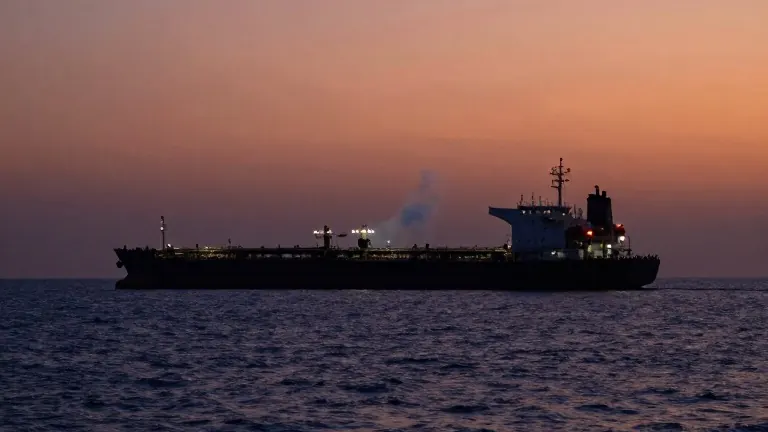
Tensions in the Strait of Hormuz continued to draw attention as Iranian state television reported that two oil tankers and a towboat struck naval mines and caught fire. The report, which cited a statement from the Revolutionary Guard, also claimed the Guard seized two U.S. drones in the airspace over the strait. The vessels’ flags and casualty counts were not specified, and the claims have not been independently verified.
In Jordan, security forces responded to an incident in Amman where an assailant killed a security officer near the Sri Lankan Embassy. The Public Security Directorate described the attack as a terrorist act, noting the assailant used a sharp object and attempted to seize a weapon. The assailant was arrested, and a second officer who intervened also sustained injuries.
Meanwhile, health officials in the Gaza Strip reported three Palestinian deaths on Thursday. A boy was killed by Israeli gunfire in Bureij, a woman was fatally shot in Khan Younis, and one person died in an Israeli airstrike in Deir al-Balah. The Israeli military acknowledged the airstrike but had not immediately responded to requests for comment on the other two incidents.