Iran offers 2-day timeline to reopen Strait of Hormuz
Tehran says it will resume nuclear talks with Washington if seven conditions are met, while Yemen records a surge of over 300,000 displaced people.
By Neha Kapoor ·

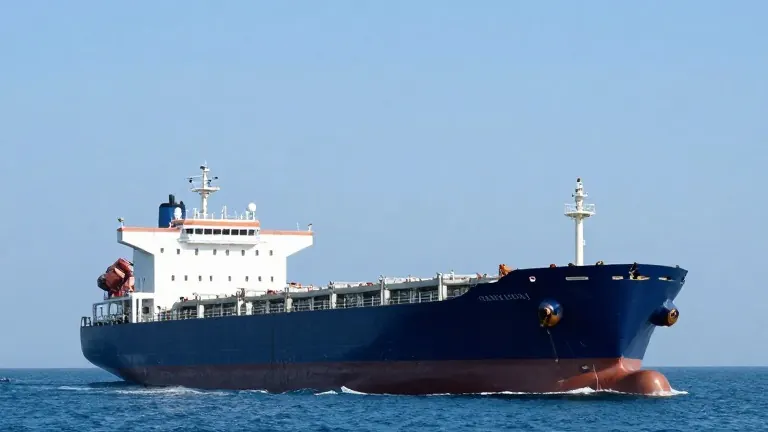
Iran announced on Monday that it holds a two-day plan to reopen the Strait of Hormuz and resume nuclear negotiations with the United States.
The shortened timeline replaces a previous framework that estimated seven days for implementation. Iranian officials stated that the new schedule applies if Washington satisfies seven specific demands. These conditions include lifting the blockade of Iranian ports and removing sanctions on Iranian oil sales. Iran also requires a ceasefire agreement that extends to Lebanon. Ships transiting the reopened waterway would follow a route agreed upon by Iran and Oman and travel under Iranian supervision. Esmail Baghaei, the spokesperson for the Iranian Foreign Ministry, described the plan as a demonstration of good faith. He noted that the proposal remains the basis for talks conducted through mediators. Baghaei did not confirm whether Tehran had altered its core demands or if the United States had accepted the terms. President Donald Trump has recently shifted between diplomatic overtures and threats of heavy bombing in public statements.
The U.N. migration agency reported that more than 300,000 people in Yemen have fled renewed combat. The fighting between Iran-backed Houthi rebels and Saudi-backed government forces has broken a four-year truce. Taiz province in southwestern Yemen continues to host displaced families, but many are moving south. Aden has received more than 56,000 new arrivals according to the International Organization for Migration. Abdusattor Esoev, head of the IOM mission in Yemen, said families are arriving with minimal belongings. He emphasized the urgent need for shelter, food, clean water, and health care.
China plans to dispatch a special envoy to Iran, Oman, and Saudi Arabia in early to mid-November. Foreign Ministry spokesperson Mao Ning stated that the envoy will focus on easing tensions and promoting regional stability. President Xi Jinping met with Oman’s Sultan Haitham bin Tariq Al Said on Monday. In a readout of the meeting, Xi said the Gulf region should not become an arena for great-power rivalry.
The Israeli military concluded a sweeping operation in Hebron, West Bank, on Monday. The campaign began last month after two Palestinian gunmen killed two Israeli soldiers. The military demolished the residences of the gunmen and confiscated weapons and vehicles. Hundreds of displaced Palestinians began returning to their homes as Israeli forces withdrew. In Deir Bahha, explosives experts searched for unexploded devices. Bulldozers cleared blocked roads. Wael Shawar, a resident, found his door broken and glass shattered upon returning. Tamara Obei, another resident, said she feared bringing her children back due to uncertainty about explosives in the house.
Two Israeli airstrikes killed two men in southern Gaza early Monday. Nasser Hospital received the bodies. One strike hit a home, while the other hit a tent. The Israeli military did not respond to a request for comment. Major fighting between Israel and Hamas halted under an October 2025 ceasefire. Israel continues near-daily strikes targeting militants. Gaza’s Health Ministry reported that approximately 1,580 Palestinians have been killed since the ceasefire began. The overall death toll now exceeds 74,500.
Source: Sentinel Colorado · original report published