
Ukraine reportedly adopts Israeli-Italian satellite terminals for drone operations
Ukrainian drone forces are reportedly using satellite terminals from Israeli firm HiSky, which are manufactured in Italy, to enhance long-range strike capabilities.
By News Media House Staff ·
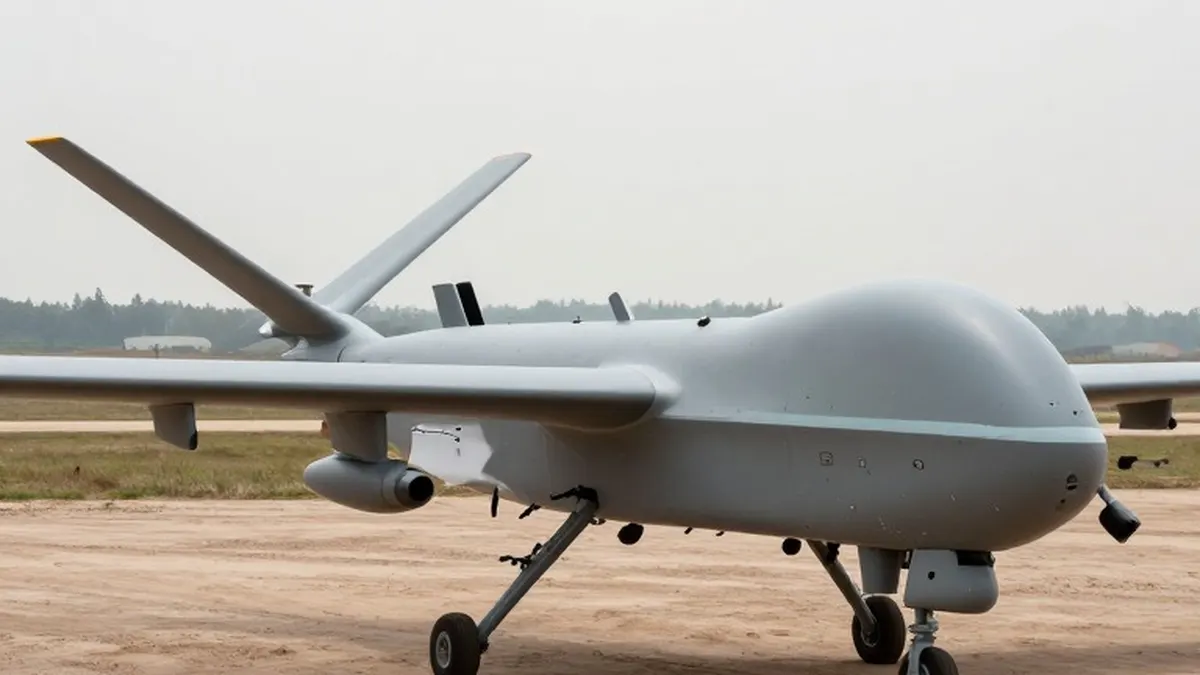
Ukrainian drone forces appear to be integrating satellite communications technology developed by the Israeli firm HiSky to support long-range strike missions, according to a recent report by the Kyiv Post. The publication cited both Russian and Ukrainian military sources to confirm that this development provides operators with an alternative communications channel for unmanned systems operating beyond the standard coverage of other networks.
The initiative offers a backup option for drones that fly beyond the operational limits of established services such as SpaceX's Starlink and Starshield. Claims first emerged in Russian military media, which alleged that the Armed Forces of Ukraine began equipping drones targeting military infrastructure and oil facilities inside Russia with terminals linked to HiSky's SmartLITE system.
HiSky, which was founded in 2015, specializes in creating compact satellite communications systems for mobile land, maritime, airborne, and unmanned platforms. The company's SmartLITE family of terminals is designed to provide secure voice and data connectivity, with the technology marketed for use in defense, homeland security, and industrial applications.
Italian media also weighed in on the matter. The La Repubblica news website reported that photos released by Russian outlets showed a crashed Ukrainian drone carrying a Starlite device. The device's label reportedly identified it as an Italian-made product and included the address of a production plant located in the Caserta province.
The reported adoption of these terminals occurs as Ukraine continues to expand its utilization of long-range unmanned systems against targets deep within Russian territory. Russian military commentators noted that drones equipped with HiSky technology can maintain communications through multiple commercial satellite networks. This capability allows operators to transmit telemetry data and adjust mission parameters during flight, although the system can transmit smaller amounts of data compared to Starlink.
Despite the emerging reports, neither Ukrainian authorities nor HiSky have publicly confirmed the operational use of the system. Israeli companies face specific constraints, as they are generally not permitted to sell platforms or solutions to Ukraine that may be used in offensive operations. Speculation has arisen that this topic may have been discussed during a visit to Israel by the head of Russian military intelligence last week.
Parallel to these developments, President Volodymyr Zelensky addressed the ongoing limitations of the US-based Starshield satellite communications system on Friday. He stated that speed restrictions remained in place, which hamper the Ukrainian military's ability to operate effectively inside the country.
Zelensky explained that these continued restrictions make it difficult to intercept jet-powered drones and other aerial threats. He argued that the situation sends a concerning signal to Russia regarding the handling of land seized during the four-and-a-half-year conflict. In his nightly video address, he noted that the speed restrictions remain active along the entire front line and in temporarily occupied territories of Ukraine.
The President expressed his expectation that the Defense Ministry and the Foreign Ministry, in coordination with relevant US structures, would work to resolve this issue. He emphasized that the restrictions limit the ability to intercept jet-powered Shaheds, which are Iranian-designed drones, and to counter other drone threats.
Zelensky further stated that the limitations send a signal that the United States may treat temporarily occupied Ukrainian land differently. He concluded by reiterating the expectation that the speed caps would be restored. Contextually, these restrictions followed mid-October reports that SpaceX had capped the speed of Starlink and Starshield, affecting equipment moving faster than about 160 kilometers per hour. Service was restored on October 24, though disruptions were recorded again over the subsequent days.
Originally published by News Media House