Violence erupts during West Bank olive harvest as rioters injure five Palestinians
Israeli security forces responded to reports of masked rioters attacking Palestinian harvesters in the West Bank, resulting in five injuries and the declaration of a closed military zone.
By News Media House Staff ·
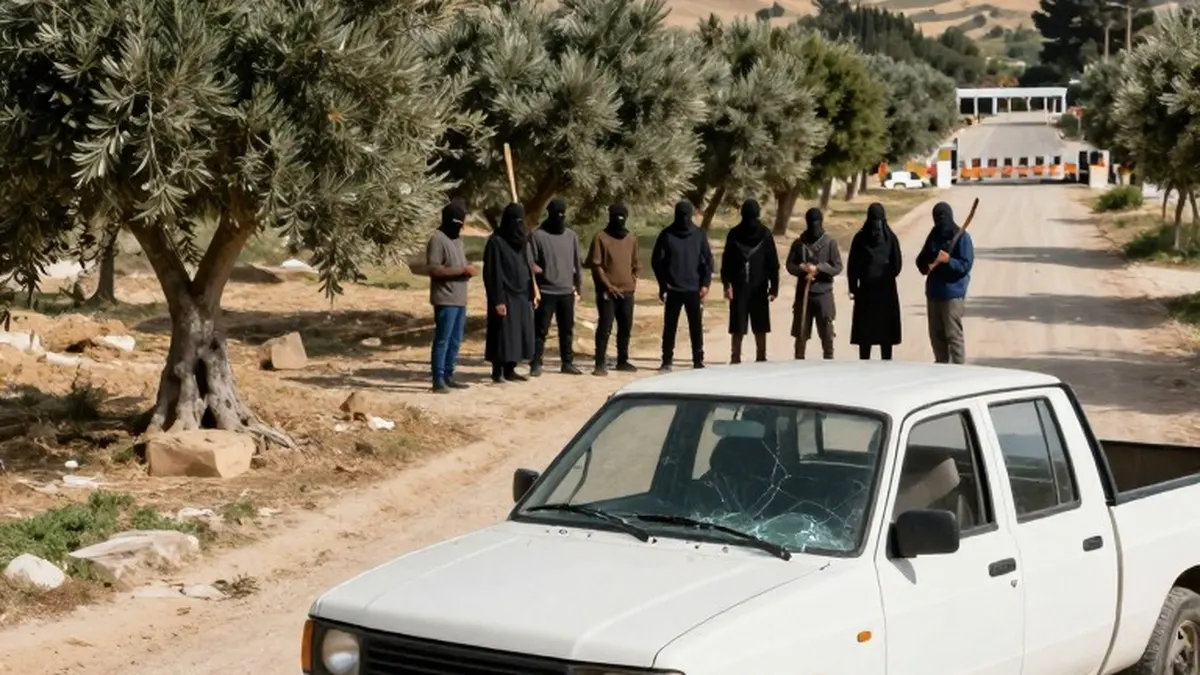
Tensions flared in the West Bank on Saturday as Palestinians and Israeli security forces clashed in two separate incidents involving the annual olive harvest. In the village of Beit Umar, located north of Hebron, a group of Palestinians reportedly hurled rocks at an Israeli vehicle. The impact shattered the windshield, causing light injuries to the driver from the broken glass. In response, Israeli security forces established roadblocks in the vicinity and launched an immediate search for the individuals responsible for the attack.
A second incident occurred near the village of Beit Fajar, which is situated a short distance from Beit Umar. According to reports from Israeli media, masked Jewish Israelis armed with clubs were seen traveling in a pickup truck. Their stated objective was to disrupt Palestinians who had gathered in the area to harvest olives. The group was reportedly aggressive, and they smashed a Palestinian car before security forces could arrive on the scene.
The intensity of the confrontation led to five Palestinians being wounded, according to KAN. Following the initial assault, the area was declared a closed military zone by Israeli authorities. Despite the restrictions, an IDF statement indicated that the Palestinians were eventually permitted to resume their harvesting activities once the immediate threat had subsided.
The situation remained volatile as dozens of additional masked rioters arrived at the site. However, these later arrivals fled before a larger contingent of security forces reached the location. During the pursuit, the security forces spotted two suspicious vehicles and fired shots into the air. The drivers responded by fleeing toward a nearby illegal settlement outpost, according to the IDF.
Further investigation into the vehicles involved in the incident revealed that one of the cars used by the rioters had been stolen. The IDF provided these details to Army Radio, highlighting the organized nature of the groups moving through the area during the harvest season.
The events in the West Bank coincided with related incidents in Jerusalem. Later in the day, police arrested four minors in the Har Homa neighborhood of east Jerusalem. The suspects were accused of throwing stones at a bus, which resulted in the shattering of its rear window.
These incidents underscore the recurring friction points between local Palestinian communities and Israeli settlers or security forces during the olive season. The harvest is a significant cultural and economic event for Palestinian families, often drawing large groups to the fields. This year's events have seen multiple reports of physical confrontations and vehicle damage across different locations.
In Beit Umar, the initial rock-throwing incident served as a catalyst for the deployment of security roadblocks. The swift response by the forces aimed to contain the situation and identify the attackers. The light injury to the Israeli driver was treated promptly, and the area was secured as the search for the rock throwers continued.
The attack in Beit Fajar involved a more direct physical confrontation. The use of clubs by the masked individuals raised concerns about the level of force being employed. The smashing of the Palestinian car was a tangible sign of the disruption intended by the rioters. The subsequent declaration of a closed military zone is a standard procedure in such high-tension areas to manage the flow of people and vehicles.
The escape of the later group of rioters toward the settlement outpost suggests a level of familiarity with the local geography. The discovery of a stolen vehicle among the fleeing cars adds a layer of complexity to the police investigation. Meanwhile, the arrests in Jerusalem indicate that stone-throwing incidents remain a common form of protest or conflict in the region, involving both adults and minors.
Originally published by News Media House