Midterm wins bring popular vote closer
New Democratic state controls in six states put the National Popular Vote Interstate Compact within reach of the 270 Electoral College votes needed to activate it.
By Jillian Foster ·
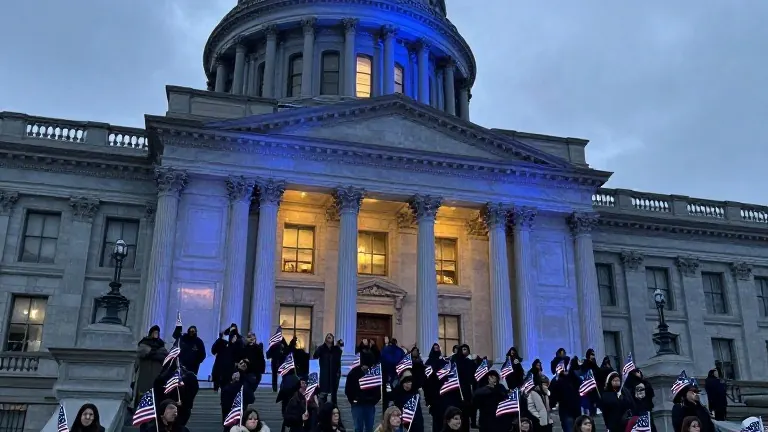
The 2026 midterm elections gave Democrats full control of six state governments, bringing the National Popular Vote Interstate Compact one step closer to activation. Arizona, Michigan, Minnesota, Nevada, Pennsylvania, and Wisconsin all shifted to Democratic majorities in Tuesday's vote. These six states hold 71 Electoral College votes combined. Eighteen other Democratic-run states have already joined the compact, giving the coalition 222 votes. The compact requires 270 votes, the same number needed to win the presidency, to take effect.
The plan would change how the president is elected. Instead of focusing on swing states, candidates would compete for the most votes nationwide. Under the current system, a candidate can win the presidency without winning the national popular vote. This happened in 2000, when George W. Bush defeated Al Gore, and again in 2016, when Donald Trump defeated Hillary Clinton. The compact would assign all its member states' electoral votes to the candidate who wins the national popular vote.
State leaders in the newly Democratic states are weighing whether to sign on. Wisconsin Governor David Crowley said he is interested in having conversations with the state legislature. He noted that his party has not controlled the state legislature for 16 years. Pennsylvania Governor Josh Shapiro also expressed support. He said the national popular vote makes sense and that he will work with lawmakers to find the right mechanism. If Pennsylvania and Wisconsin join, the compact needs just two of the remaining three states, Arizona, Michigan, or Nevada, to reach the 270 threshold.
Not all Democratic governors are ready to commit. Arizona Governor Katie Hobbs declined to say whether she favors joining the compact. She said her top priorities are affordability, border security, water protection, and public education. Her office did not provide further comment. Michigan's new Democratic Governor, Jocelyn Benson, did not respond to requests for comment. Nevada presents a more complex history. In 2019, Democratic Governor Steve Sisolak vetoed a measure to join the compact. In 2023, Democrats passed another measure but could not overcome a Republican veto. Nevada's new Democratic Governor, Aaron Ford, also did not respond to requests for comment.
Supporters of the compact are preparing for legislative action. Patrick Rosenstiel, a Republican strategist in Minnesota and senior consultant to the popular vote movement, said the campaign is revving up as state legislatures convene in January. He said the organization has already lined up legislative sponsors. Rosenstiel argued that his vote in Minnesota has been irrelevant for decades because the state reliably votes Democratic. He said the national popular vote forces campaigns to focus on every persuadable voter in every precinct.
Legal challenges are expected. The America First Policy Institute, a pro-Trump think tank, wrote in September that the change disenfranchises voters in member states and violates the Constitution. Derek Muller, a law professor at Notre Dame, said there are constitutional concerns that could lead to legal fights. He noted that states have the power to run elections but not to set rules that determine outcomes in other states' contests. He also pointed to differences in state ballots and the presence of third-party candidates. These factors could dilute the power of a vote in one state compared to another, potentially violating the 14th Amendment's equal protection clause.
The U.S. Supreme Court has ruled that states can require electors to vote for the presidential candidate they are pledged to. Muller said the Supreme Court might also decide that states cannot join a compact to change their core constitutional duties without congressional approval. He said he thinks the Supreme Court will be interested in the case. The next step is for state legislatures to pass the necessary bills in early 2027.
The compact has been in place since 2008, but it has not yet reached the threshold. The 2026 elections changed the political map. With six new states under Democratic control, the path to 270 votes is clearer than at any point since the compact's creation. The outcome depends on whether governors and legislatures in those states choose to sign the agreement.
More Politics · Aurora news · Report a business · Got a Story?