Report: Four Firefighters Died After Being Trapped by Wind
A federal review cites understaffing and aggressive suppression tactics in the deaths of the Rifle Helitack crew on the Colorado-Utah border.
By Martin Reynolds ·
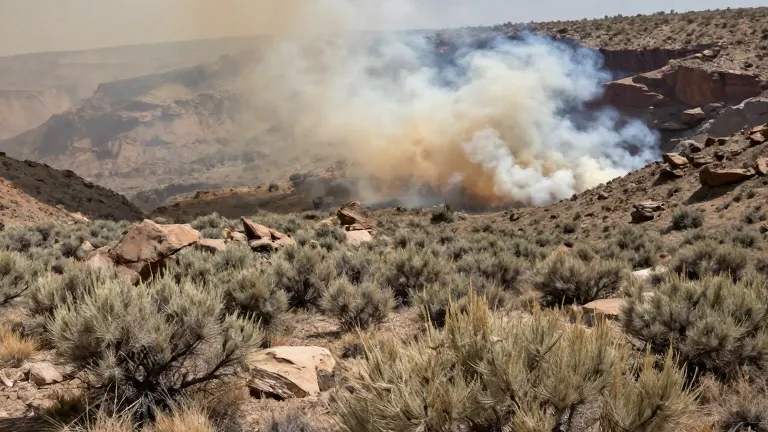
Four helitack firefighters died in June when strong winds pushed a wildfire toward their position on the Colorado-Utah border, according to a report released by the U.S. Department of the Interior. The review identifies chronic understaffing, unexpected fire behavior, and a new policy to suppress fires quickly as primary contributors to the tragedy.
The incident occurred on June 27 in Black Ridge Canyon Wilderness. Multiple lightning fires ignited during a period of extreme drought. The Knowles fire merged with others to form the Snyder Fire. The Rifle Helitack crew had been dropped into a remote area to construct a fire line. They became trapped when high winds forced the flames over complex terrain and onto their location.
The report states that the Trump administration revived a previously discredited policy to stomp out all wildfires quickly. This organizational posture drove the decision to deploy helitack firefighters to small wilderness starts despite forecasts for extreme fire weather conditions. The goal was to prevent the spread of cheatgrass and protect sage-grouse habitat and a downwind community.
Emily Barker, Nick Hutcherson, and Sydney Watson were killed at the scene. Nathan Matthews sustained burn injuries and died on July 24. A fifth firefighter on the team survived with burn injuries. The crew was forced to deploy fire shelters because a helicopter could not reach them in time.
Ron and Lisa Hutcherson, Nick’s parents, said the crew should not have been sent out ahead of the fire given the dangerous wind forecasts. They believe the deaths were preventable due to a failure of leadership and oversight. Ron Hutcherson asked in an email to The Associated Press, “Who was watching the bigger picture? Who was responsible for bringing those firefighters home while there was still time?”
The investigation detailed communication breakdowns during the event. Dispatchers tracked up to 16 active aircraft, three emerging incidents, and multiple new starts simultaneously. The report notes that severe cognitive task saturation prevented dispatchers from transmitting the mandatory scheduled Fire Weather Forecast broadcast. Incident commanders also lacked clear information about the location of firefighters on the Knowles and Gore fires.
A large fire eight miles west of the crew was observed three and a half hours before the entrapment. The fire reached the firefighters in less than three hours. The Hutcherson family met with investigators in Grand Junction on Oct. 26 for an official readout. They were told that an aging mobile radio system and software crashes compromised official channels, forcing some firefighters to use cellphones to communicate.