
SpaceX test launch threatens to leave NASA without a ride
A planned Starship flight today marks a step toward retiring Falcon 9, the current sole U.S. provider of crewed missions to the space station.
By Diego Mendoza ·
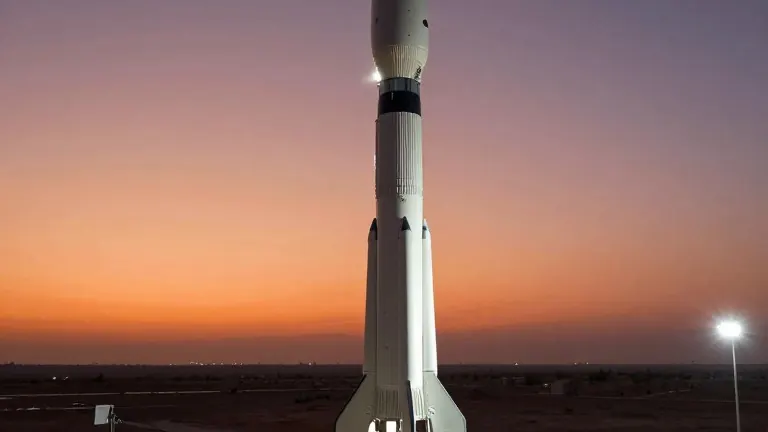
SpaceX will attempt a full orbital flight of its Starship rocket later today from a launch pad in South Texas. The vehicle is scheduled to circle the Earth and land vertically on the same pad 22 and a half hours after liftoff. Success in this test would accelerate the company’s plan to phase out its older Falcon 9 rocket, a move that creates a logistical gap for NASA.
Falcon 9 currently launches the Dragon capsule, which is the only American spacecraft capable of transporting astronauts to and from the International Space Station. NASA signed a contract in September for three additional Dragon flights. If these missions occur consecutively every six months and no new contracts are awarded, Dragon will stop flying to the station by 2028. The space station itself is scheduled for retirement in 2030.
The shift reflects a change in the company’s revenue structure. SpaceX reported approximately $2.1 billion in revenue from space launches through September of this year. In comparison, its satellite internet service Starlink generated about $12.8 billion, while its AI division earned roughly $10.9 billion. These figures indicate that launch operations are a small portion of the company’s total income.
Elon Musk stated on X earlier this year that SpaceX intends to shift engineering and production resources to Starship to achieve launch rates of several times per day. He noted this strategy implies winding down Falcon. Gwynne Shotwell, SpaceX president, described Falcon 9 as a minivan at a September summit in Los Angeles, contrasting it with the larger capacity needed for long-duration missions to Mars.
Caleb Henry, director of research at Quilty Space, noted that Dragon has become the de facto method for astronauts to reach orbit. He observed that building space capsules is costly and time-consuming, and NASA is currently the primary customer willing to pay for them. Henry stated there is not a strong commercial market for human spaceflight.
The potential retirement of Falcon 9 also affects the commercial launch market. Quilty Space estimates the market may face a shortage of about 150 launches between now and 2030. The U.S. Space Force said in a statement to NPR that it has secured Falcon 9 launches through 2028 and is confident other suppliers can fill remaining needs. Tim Farrar, president of TMF associates, said NASA missions are profitable but small relative to SpaceX’s larger business operations.
Shotwell suggested that Boeing could take over station flights with its Starliner capsule. She said Boeing has been paid more than SpaceX for capsule development and should fly its vehicle. Starliner faced technical issues in 2024 that extended a crew’s stay on the station from eight days to nine months. A crewed Starliner flight is planned for 2028.
Farrar noted that NASA helped prevent SpaceX from going bankrupt after early rocket failures in 2008. He said he hopes for a degree of loyalty in the current arrangement, though he acknowledged the business logic behind SpaceX’s decisions. SpaceX did not respond to a request for comment regarding a specific date for Falcon 9 retirement.
More Business · Rip-Off Report · Report a business · Got a Story?