Asia hosts week of summits as US and China compete for influence
Leaders gathering in China and south-east Asia will confront trade disputes, regional security tensions and questions over relations between Washington, Beijing and Moscow.
By News Media House Staff ·
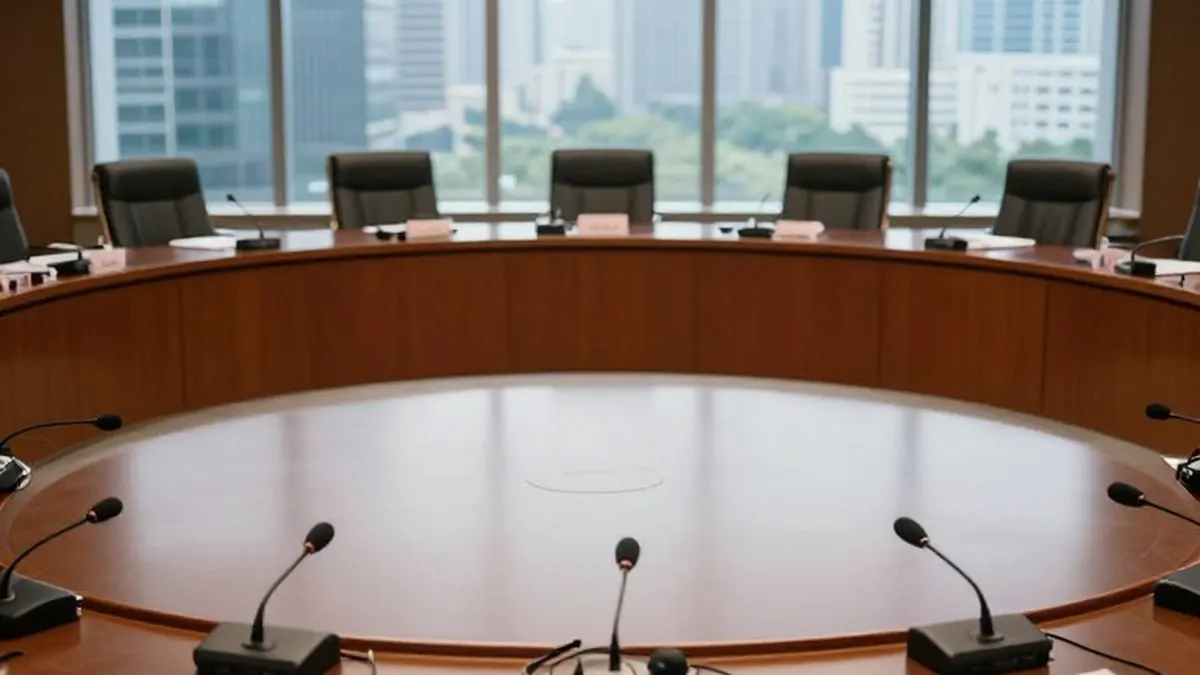
A series of diplomatic summits across Asia this week will bring world leaders together amid competition for influence between China and the United States. The meetings will cover trade, technology and security, with a confirmed encounter between Donald Trump, Xi Jinping and Vladimir Putin drawing particular attention.
China will host the Asia-Pacific Economic Cooperation leaders’ meeting in Shenzhen, its southern technology hub, beginning on Wednesday. Trump arrives two weeks after losing the US midterm elections. Apec economies account for more than 60% of global GDP, and the forum has traditionally championed free trade and multilateral cooperation. This year, the meeting between the US, Chinese and Russian presidents could dominate proceedings.
Comparisons have been drawn with the 1945 Yalta conference, where US, British and Soviet leaders met to determine Europe’s postwar future. Analysts nevertheless consider an agreement dictating outcomes for Ukraine and Taiwan without their participation unlikely. Xiaoyu Pu, an associate professor of political science at the University of Nevada, said the encounter could carry greater symbolic than practical weight. He identified Trump’s interest in nuclear arms control, Xi’s desire for stable US relations while retaining ties with Russia, and Putin’s pursuit of bargaining power over Ukraine.
The diplomatic schedule begins on Sunday with the Association of Southeast Asian Nations summit in the Philippines, which Trump will attend. US officials will also meet representatives of Australia, India and Japan in Manila through the Quad grouping. Meanwhile, Cambodia is hosting a Francophone summit attended by Canadian prime minister Mark Carney and French president Emmanuel Macron.
Artificial intelligence supply chains and governance, lower tariffs and the transition to green energy will feature across the gatherings. Regional concerns include the South China Sea, where China has constructed large military outposts in contested waters, and haze from enormous Indonesian forest fires. Taiwan’s status and Myanmar’s humanitarian and security crisis will also receive attention. Taiwan, which China does not recognise, is sending Acer’s founder to represent it at Apec.
The meetings come as south-east Asian countries seek to manage their relationships with both major powers. Some analysts view Trump’s transactional diplomacy as a continuation of Washington’s longstanding shift towards Asia, although his unpredictability has unsettled smaller nations. Economist Jayant Menon of Singapore’s Iseas-Yusof Ishak Institute said countries were preparing to rely less on the US by pursuing agreements among themselves and with partners including the European Union.
China’s greater predictability has not removed friction with its neighbours. Premier Li Qiang could face difficult discussions in Manila over the South China Sea, where Brunei, China, Malaysia, the Philippines, Taiwan and Vietnam have longstanding territorial disputes. A pact addressing the waterway is no longer expected at this year’s Asean summit. Negotiations will continue next year under Singapore’s leadership of the group.
Myanmar’s efforts to regain acceptance will present another challenge for Asean members. An international court of justice judgment expected on Thursday could find the country responsible for genocide. Coup leader Min Aung Hlaing remains excluded from Asean gatherings but may send a representative. The diplomatic calendar continues next month with the G20 summit in Miami, which Xi is expected to attend if relations between China and the US remain stable.
Originally published by News Media House