Blue Origin unveils Northstar engine and GS3 stage for New Glenn
The new hardware aims to cut manufacturing costs by 75 percent and expand payload capacity for geostationary and lunar missions.
By Neha Kapoor ·
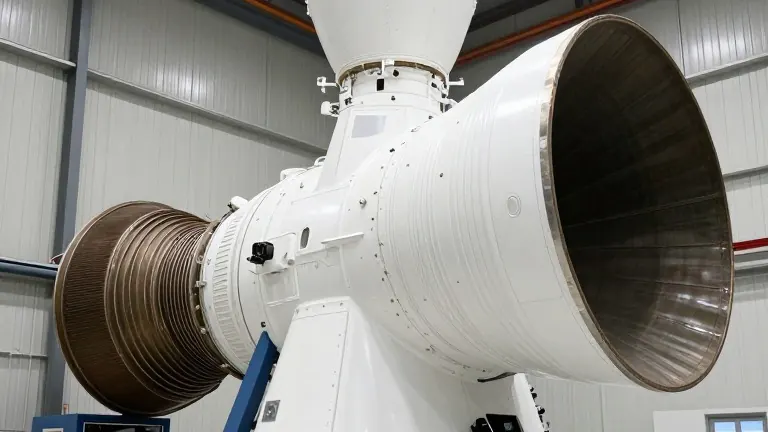
Blue Origin introduced two major upgrades for the New Glenn rocket on Thursday to lower production costs and increase payload delivery to geostationary orbit and the Moon. The company plans to replace the first-stage BE-4 engine with a new design called Northstar and add a third stage named GS3.
CEO Dave Limp presented the details at the UP.Summit conference at the Shuttle Landing Facility in Florida. He stated that the company targets more than 1,000 annual launches with the updated vehicle. Limp noted that current market conditions support this growth, saying, “There has never been higher demand for launch, ever.”
The Northstar engine features a simpler design with fewer components and greater power than the BE-4. It contains half as many parts and weighs 30 percent less. Approximately 65 percent of the engine will be produced using 3D printing technology.
Manufacturing a Northstar engine will cost one-quarter of the price to build a BE-4, according to company estimates. Blue Origin aims to reduce the assembly time for each unit to less than one day. Test firings for the new engine have already begun.
The initial thrust for Northstar is set at 715,000 pounds, compared to 640,000 pounds for the current BE-4. The new engine retains the methane and liquid oxygen fuel mix, the oxygen-rich staged combustion cycle, and the single-shaft turbopump architecture of its predecessor.
The GS3 third stage uses hydrogen and oxygen to provide additional propulsion. This addition is designed to boost payload capacity for New Glenn. Blue Origin will continue manufacturing BE-4 engines for United Launch Alliance, which uses two BE-4 engines on its Vulcan rocket.
More Tech · National news · Report a business · Got a Story?