Chicago museum recreates lost Mary Cassatt mural for fall show
The Art Institute is reconstructing a 60-foot painting commissioned for the 1893 World's Fair that vanished after the 1910s.
By Neha Kapoor ·
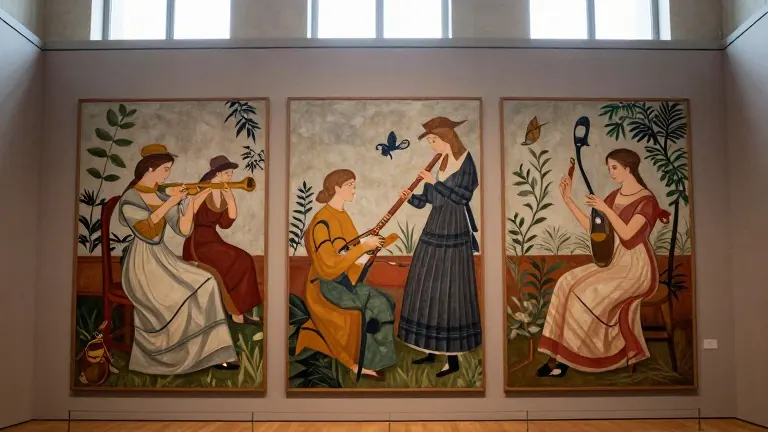
Visitors to the Art Institute of Chicago will see a large-scale recreation of a painting that has not hung in public view since the early 20th century. The fall exhibition centers on Mary Cassatt’s missing mural, “Modern Woman,” which was created for the 1893 World’s Columbian Exposition. The original work is gone, but the museum is using archival records and historical references to reconstruct the piece for this season.
Cassatt, an American artist based in Paris, was commissioned to paint the work for the Woman’s Building at the fair. That pavilion was spearheaded by Chicago philanthropist Bertha Palmer and served as a dedicated space for exhibits on women’s contributions to culture, science, and industry. The building featured displays on women’s patents, books, and labor. Cassatt’s mural occupied the main hall and was paired with a complementary work by artist Mary MacMonnies titled “Primitive Woman.”
The mural was a massive undertaking, measuring 60 feet in length and 14 feet in height. It consisted of three panels depicting scenes of women in various settings. One panel showed women chasing a figure representing fame, another depicted them playing music, and the central panel illustrated women tending to an orchard. Art historian Wanda Corn, a professor emeritus at Stanford University, noted that the central scene symbolized women gaining access to knowledge and science. The work highlighted the expanding educational and professional opportunities available to women during that era.
After the fair concluded, the Woman’s Building was dismantled, and Cassatt’s mural was placed in storage. Curator Annelise Madsen stated that the last known location for the artwork was the Palmer family’s Gold Coast mansion. That residence, located on Lake Shore Drive, was once the largest private home in Chicago before its demolition in 1950. The paper trail regarding the mural’s whereabouts ends in 1912.
Around 1912, the director of the Art Institute wrote to inquire about temporarily displaying the mural. Madsen explained that the correspondence remains in the museum’s archives but the request never came to fruition. The mural was never unrolled or installed. Theories suggest the piece may have suffered water damage or been destroyed by fire, though no definitive cause has been established.
Corn believes the original is unlikely to surface. She observed that many researchers have investigated the missing work and concluded it is gone. “So I don’t think there’s a chance that it would show,” she said. The mural nonetheless played a key role in establishing Cassatt’s reputation in the United States and opened doors for other female artists to pursue large-scale commissions.
The current exhibition aims to tell the story of this lost masterpiece and its place in Chicago history. By reconstructing the visual elements, the museum provides a tangible link to the 1893 fair and the women who contributed to it. The show runs through the fall season at the Art Institute.
Source: Chicago Sun-Times