Colorado sets record for warmest water year with lowest snowpack on record
CSU data reveals 2026 was 4.5 degrees above average, with snowpack at 51% of normal and daily heat records occurring 21.7 times more often than cold records.
By Diego Mendoza ·
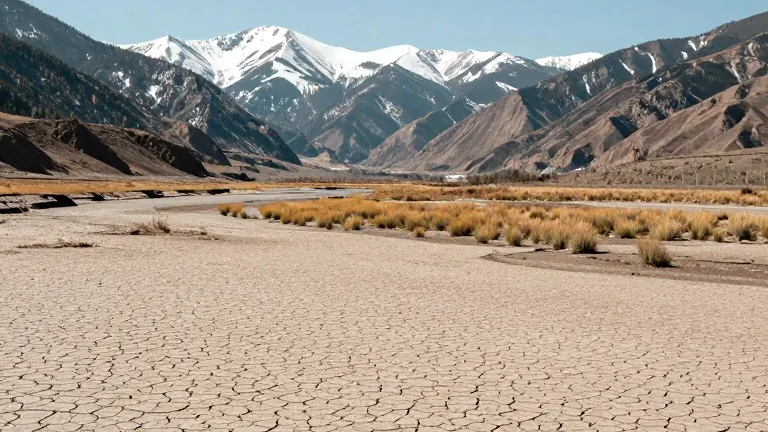
Colorado recorded its warmest water year on record during the 2025-26 cycle, which concluded in September. The state also logged its lowest mountain snowpack in history. Researchers at Colorado State University released a report on October 26 detailing these extremes. The findings show statewide temperatures ran 4.5 degrees Fahrenheit above the 1991-2020 average. The report describes the year as one for the record books, citing substantial margins in both warmth and dryness.
The data reveals a stark imbalance in temperature records. Daily warm records occurred with 21.7 times greater frequency than cold records. This ratio represents the most unbalanced split in the state's history. Four months, December, January, March, and August, were the warmest ever for those specific months. Eleven of the twelve months ranked among the top 15 warmest on record. July 27 set a new state record for the hottest single day, surpassing a record set in July 2025.
Precipitation patterns complicated the heat. While some areas received average rainfall, the timing was critical for agriculture. April precipitation on the eastern plains fell way below average. This lack of water, combined with above-average temperatures, caused drought to develop quickly. Agricultural lands suffered severe impacts as a result. By one measure, Garfield and Pitkin counties have experienced drought conditions for 15 consecutive months.
The low snowpack peaked at 51% of average levels about a month earlier than usual. Rapid melting followed an intense heat wave in March. Jay Fetcher, who tracks snow disappearance on his ranch near Steamboat Springs, recorded the snow leaving his hay meadow on March 2. This broke the previous record of March 24. In Aspen, resident Greg Poschman noted that bears were frequently seen in city streets this year. He attributes their presence to the near total absence of food sources at higher elevations, such as service berries and chokecherries.
River conditions reflected the dryness. The Roaring Fork River in Aspen dropped to a streamflow of 7 cubic feet per second. Water temperatures reached 70 degrees. In Boulder, residents experienced 57 days with temperatures of 90 degrees or higher. This is significantly higher than the 33-day average for the previous three decades. Lamar recorded 97 such days, compared to a long-term average of 73.
State climatologist Russ Schumacher noted that 2026 likely remains an extreme outlier. He stated that the chances for extremely warm years are increasing as warming continues. Gregg Stults, a wheat farmer near Wray, reported that heat continued into autumn. Several evenings in the last month saw ambient temperatures exceed 90 degrees at 9 p.m. Rain has since begun falling in the San Juan region, causing localized flooding around Telluride. Peaks in the state currently hold snow, marking the start of the new water year.
The new water year began in October. Early data suggests a different pattern than the previous cycle. While snow is present on high peaks, the ground remains warm. Farmers and residents monitor river levels and soil moisture closely. The Palmer Drought Severity Index ranked the past year as the worst on record. It was slightly worse than the conditions seen in 2002. The state enters the winter with full awareness of the previous year's extremes.
Source: Sentinel Colorado · original report published