US Intelligence Reports Iran Retains Significant Missile Stockpile
Washington estimates Tehran still holds between 1,500 and 2,500 missiles, a figure that influences presidential decisions on further strikes.
By News Media House Staff ·
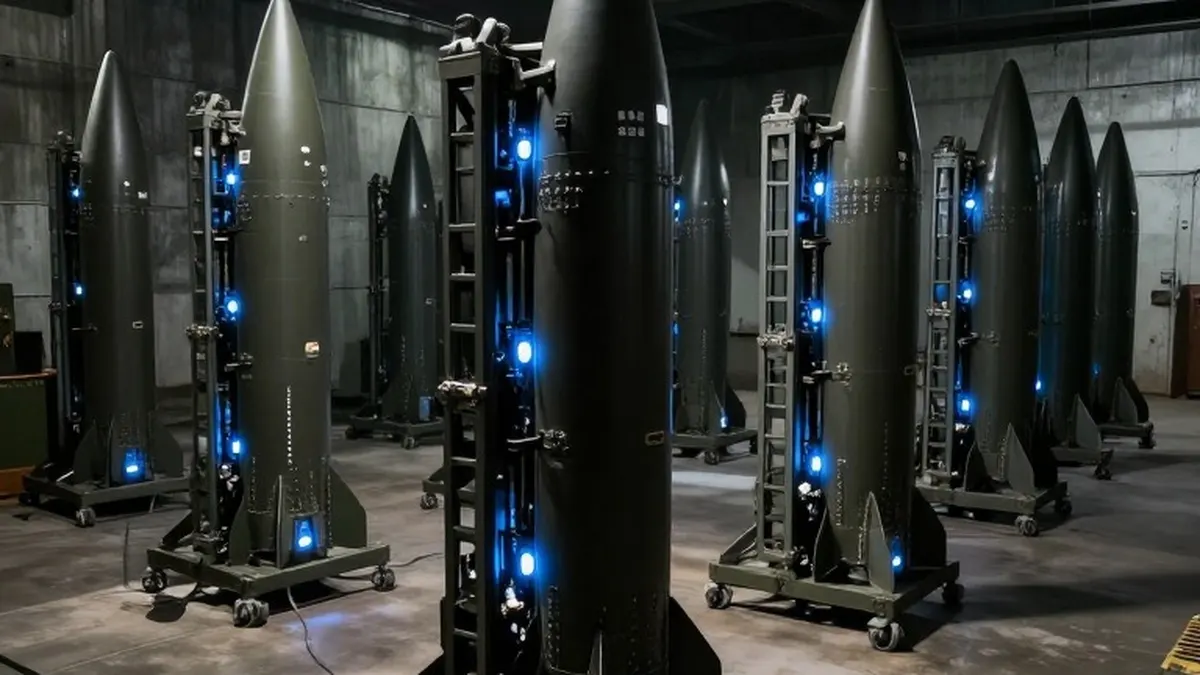
US intelligence assessments indicate that Iran still possesses a substantial arsenal of ballistic missiles following the recent conflict. According to US officials who spoke to The Wall Street Journal on Saturday, the Islamic Republic is estimated to hold between 1,500 and 2,500 missiles. This lower bound represents more than half of the stockpile that was estimated before the war began, suggesting that the country has retained a significant portion of its strategic capabilities.
The precise number of missiles in Iran's possession remains difficult to determine. Officials noted that tracking the exact count is complex because it includes both weapons that are in storage and those that are ready for immediate launch. Despite these challenges in calculation, it is clear that Tehran still has the capacity to launch substantial attacks against its adversaries.
Jim Lamson, a former CIA analyst who specialized in the Iranian military and is currently a visiting research fellow at King’s College London, explained that estimating Iran's military capabilities has always been a complicated task. He noted that even before the recent war, obtaining exact figures was difficult. Lamson told the publication, “Having done this work for the government, I know it can be extremely low confidence even with all the classified information.”
The persistence of Iran's military strength has begun to influence diplomatic and strategic decisions in Washington. US officials stated that the restoration of much of Iran's military capabilities is affecting President Donald Trump's decision-making process. Specifically, the intelligence regarding the missile stockpile is a factor in whether the President decides to launch further strikes alongside Israel.
In addition to the current stockpile, recent reports have highlighted Iran's ongoing production capabilities. Last week, Bloomberg reported that an intelligence estimate determined Iran can build approximately 50 ballistic missiles per month. This production rate is notable given the damage sustained by the country's industrial capacity during the recent conflict, indicating a resilient manufacturing sector.
The assessment of Iran's arsenal extends beyond ballistic missiles. Jim Lamson, who serves as a research fellow at the Department of War Studies at King’s College London, provided additional context to Bloomberg. He highlighted that there could also be thousands of Shahed-type strike weapons remaining in the Iranian arsenal. These drones and other strike weapons add another layer to the complexity of assessing the total threat level posed by Tehran.
The combination of a large existing stockpile and a steady monthly production rate suggests that Iran's military deterrence remains a central concern for US policymakers. The ability to produce around 50 missiles a month means that even if current stocks are depleted in future engagements, the country can replenish its forces relatively quickly.
For US officials, the key takeaway from the intelligence is not just the number of missiles in storage, but the overall capability for sustained conflict. The fact that Iran retains over half of its pre-war stockpile, coupled with the potential for thousands of additional strike weapons, indicates that the threat level remains high. This reality complicates the decision-making process for the administration as it weighs the costs and benefits of further military action.
The difficulty in tracking these numbers underscores the challenges of modern intelligence work in the Middle East. As Lamson pointed out, even with access to classified data, confidence in specific numbers can be low. This uncertainty means that decision-makers must plan for a range of scenarios, from a reduced but still significant arsenal to a fully restored one.
As the US and Israel consider their next steps, the intelligence regarding Iran's missile capabilities will likely play a pivotal role. The reports suggest that while the war has taken a toll, it has not broken Iran's strategic military posture. The retention of a large fraction of its pre-war missiles, along with the continued production of new ones, ensures that Tehran remains a formidable military player in the region.
Originally published by News Media House