
West Bank medics report rising delays and violence against ambulances
A new report highlights how increased checkpoints and settler violence in the West Bank are endangering patients and staff, with journey times to hospitals significantly extended.
By News Media House Staff ·
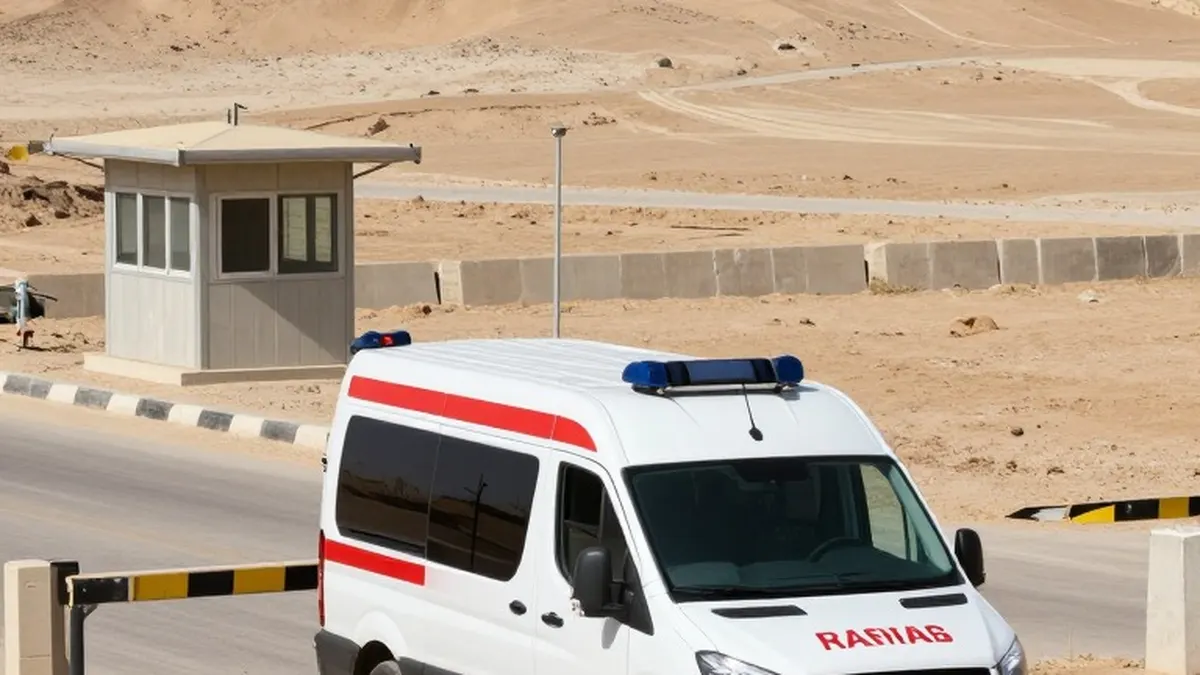
A report published on Monday by Physicians for Human Rights Israel details the growing challenges faced by emergency medical personnel in the West Bank. The study, which cites testimonies from Yousef Diriyah and two dozen other paramedics in the Nablus area, alleges that Israeli military checkpoints are causing critical delays in patient transport. These delays are described as costing precious time, particularly during the golden hour following an injury when medical intervention is most vital.
Diriyah, an ambulance driver from Aqraba, recounted an incident where his vehicle was held for ten minutes at a checkpoint while transporting a critically wounded gunshot victim. Despite the patient bleeding heavily, soldiers demanded identification documents and insisted on seeing a photograph of the patient's ID. Diriyah noted that one soldier replied, Let him die. I don't care, when told the delay could be fatal. The patient was eventually transported to a hospital in Nablus.
Bashar Qaryouti, a paramedic from Qaryut, highlighted the significant increase in travel times since the war began in October 2023. He stated that a journey to Nablus that previously took 25 minutes now requires an hour. Medical workers in the region identify five checkpoints that have been newly installed or subjected to tighter closure hours, restricting movement between villages and access to the main city.
The International Organization for Health data indicates a fluctuation in recorded incidents. In 2022, 181 incidents were documented, rising to 233 in 2025. In the first ten months of 2026, 157 incidents were recorded, placing the year on pace for fewer than 190 total incidents. Most of these events occurred during patient transport and involved delays imposed by checkpoints or Israeli forces.
Other data from the Insecurity Insight and the Safeguarding Health in Conflict Coalition shows a peak of 760 incidents in 2024, down from 93 in 2022, with 346 recorded in 2025. The IDF responded to the allegations by stating that it routinely works to ensure the freedom of movement and safe passage for medical personnel. The military stated that troops are instructed to allow emergency vehicles to pass subject to security checks and that specific allegations are thoroughly investigated.
Medics also reported a deterioration in the treatment they receive from soldiers and an increase in violence from settlers. Qaryouti noted that since the start of the conflict, medical teams treating injured Palestinians are sometimes viewed with suspicion. He linked the rise in aggression to the proliferation of settler outposts, stating that 20 new outposts have been established in the Nablus area since October 2023.
The violence has had fatal consequences. Mohammad Mousa, a 49-year-old ambulance driver from Qaryut, was shot dead on April 20, 2024. Palestinian reports indicated he was shot by settlers after they threw stones at locals. While the police closed their investigation, the IDF stated that the case is under review by the Military Advocate General's Office following an investigation by the Military Police Criminal Investigation Division.
Paramedics described being threatened, verbally abused, and attacked by both soldiers and settlers. Ibrahim, a paramedic from south of Nablus, described an incident in Aqraba where settlers surrounded their ambulance, shattering all windows and breaking lights and mirrors. He noted that the attack occurred in full view of soldiers, who sometimes stood by or assisted the attackers. The Palestinian Red Crescent Society remains the largest provider of emergency services, operating a significant share of ambulances in the region.
Originally published by News Media House