ER Doc Opens Direct-Pay Clinic in Denver's Jefferson Park
Noah Kaufman, known as 'Ninjadoc' on television, launched a practice in northwest Denver that treats up to 90% of emergency cases without insurance.
By Martin Reynolds ·
Noah Kaufman estimates his new clinic can handle 80% to 90% of the cases that traditionally fill hospital emergency rooms. He opened KaufCare five months ago in the Jefferson Park neighborhood of northwest Denver. The practice operates without traditional health insurance. It sits in a red brick storefront on the 2500 block of Eliot Street.
Kaufman spent 23 years as a board-certified emergency medicine doctor. He became a national figure after appearing on the television show American Ninja Warrior. He earned the nickname Ninjadoc during a 2013 qualifying round in Los Angeles. He reset a competitor's dislocated shoulder on camera before completing the course himself. He appeared in seven seasons of the show. He also co-founded the Wolfpack Ninjas, a touring obstacle course business that closed in 2023.
Kaufman says he burned out on the emergency room. He wanted to keep practicing medicine but avoid high costs and long wait times. He chose a location between standard urgent care centers and full-service hospitals. The facility includes a small pharmacy, a lab, an ultrasound machine, and exam rooms. An imaging room houses an X-ray machine that Kaufman describes as his favorite part of the building. He says the clinic can treat cuts, broken bones, and blood clots. He calls the space an escape valve for nearby emergency departments.
The clinic employs Kaufman and Dr. Steve Krebs. Three medical assistants work with them. Patients pay set prices for services. A membership costs $149 per month and includes one visit per quarter. Companies can buy prepaid passes for $500 to cover one visit for an employee. These passes are transferable. Kaufman notes that payments to direct-pay providers do not count toward insurance deductibles.
Kaufman grew up in Chicago and played wrestling and gymnastics. He attended the University of Miami in Coral Gables, Florida. He worked as a cheerleader on the football field. He later taught English in Japan for one year. He completed medical school at Tulane University in Louisiana. He trained in emergency medicine in Ohio. At 51, he deals with back issues that limited his physical activity. He sought opinions from two orthopedic doctors and three neurosurgeons. He received multiple MRIs and CT scans. He received confusing bills from several providers. This experience motivated him to build the new clinic.
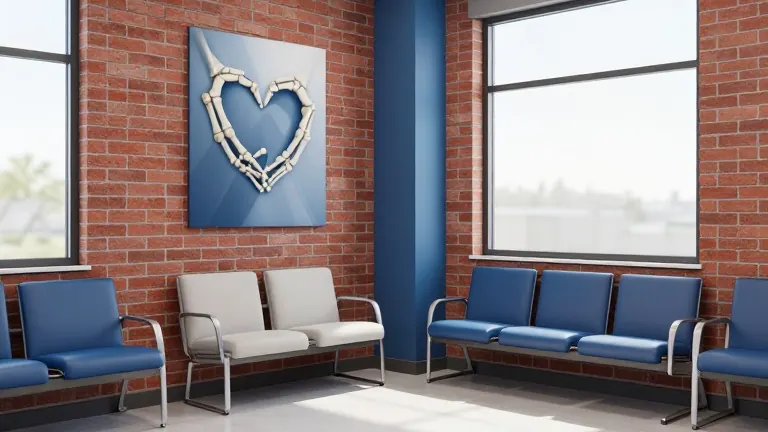
Kaufman used his life savings to fund the project. He remodeled the building himself. He says he cut his hand open during the renovation. He and a friend painted the walls. His friend Matt Greco, who designed obstacle courses for the Wolfpack Ninjas, designed the interior of the clinic. A painting in the waiting area depicts two hands forming a heart shape. Kaufman and an employee created the art while testing the new X-ray equipment.
KaufCare is part of a growing direct-pay healthcare movement in Colorado. The state has adopted roughly 10% of the country's direct primary care clinics since 2009. Pinnacle Advanced Primary Care launched five years ago with a similar model. It now operates three clinics, two in Colorado Springs and one in south Denver. Travis Bockenstedt, Pinnacle's president, says the model works like a subscription service. He estimates that 40% of a traditional practice's revenue goes toward billing and coding. He says Pinnacle doctors see six to 10 patients per day. They spend an average of 40 minutes with each patient.
Beth Holmes, vice president of Hint Connect, reports that direct primary care members grew by 837%. Clinicians in the sector grew by 555%, according to a 2026 trends report. Holmes says awareness among the general public remains low. She notes that larger practices have lowered barriers for new entrants. Colorado has a higher per-capita adoption rate for this model than most other states. Holmes says the model requires a market marker in each area to establish demand.
Kaufman says he is not a primary care doctor. He focuses on procedures and acute care. He performs joint injections, mole removals, and stitches. He says he can remove a fish hook from a patient's cheek or a cyst from the neck. He aims to free up emergency room staff to care for patients with serious emergencies.
Kaufman says he has wanted to be a doctor since age two. He took the oath to do no harm in medical school. He says the financial system often caused harm to patients. He says the system is infuriating for patients. He says he has always wanted to make it better. He points to the painting by Greco on the wall. He says Wolfpack is still in the DNA of the clinic.
More Business · Denver news · Rip-Off Report · Report a business · Got a Story?