Kansas City play 'Maletas' opens Friday at Greenwood Social Hall
A multimedia performance exploring displacement and assimilation will run for two nights in Northland.
By Diego Mendoza ·

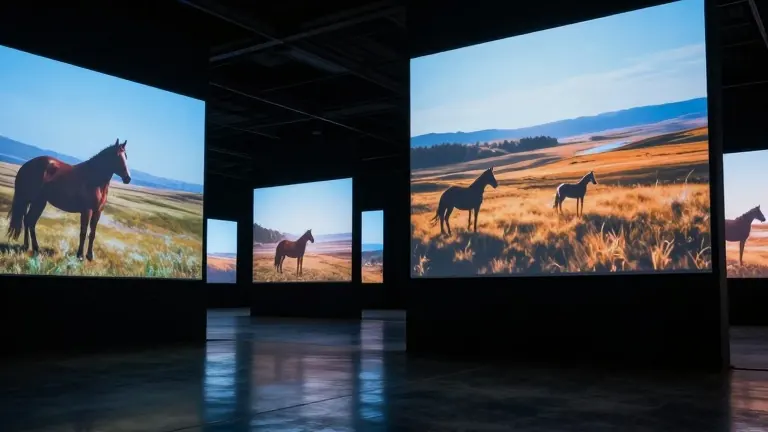
Kansas City’s immigrant community faces a unique challenge of maintaining identity while integrating into local life. Alberto Racanati aims to address this tension in his new multimedia play, “Maletas: An Immigrant Story.” The production, which translates to “suitcases” in Spanish, premieres at Greenwood Social Hall in Kansas City, Missouri.
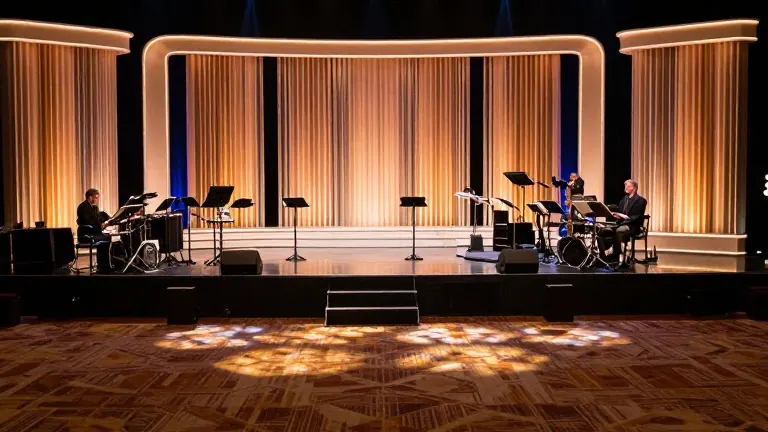
Racanati, who has lived in the United States for more than ten years, created the music and assembled the team for the show. He collaborated with Jose Faus, a poet originally from Colombia, to write the verses for the performance. The project received grant funding from ArtsKC last year. The show is scheduled for 7 p.m. on Friday, Nov. 14, and Saturday, Nov. 15, at the venue located at 11750 Bellevue Ave.
The narrative follows an unnamed protagonist through four distinct acts. Faus plays the character, who experiences displacement and culture shock. A literal suitcase is built into the stage and serves as a central prop. Racanati selected the object because it symbolizes movement and transience. The story tracks the character from childhood to old age, focusing on how they navigate bullying and the pressure to assimilate.
Faus drew on his own history to write the poetry. He immigrated to a historically Mexican American neighborhood in Kansas City at age nine. He recalled that while the community shared cultural roots, he often felt isolated at school where few peers spoke Spanish. “So there was always this sense of: How do I fit in?” Faus said. These personal memories of home and family influenced his approach to the piece.
Racanati stated that the protagonist remains intentionally unnamed to allow the story to represent a broader experience. “The show is not my story specifically or anybody's story,” Racanati said. “I want this to be a nondescript story.” The production features amplified singing, trumpets, cello, and drums. The music accompanies the poetry to create what Faus described as an impression of loss, longing, and resilience.
The performance concludes with the protagonist suffering from memory loss in their final years. Racanati explained that this ending represents the completion of the assimilation cycle, where a person forgets their origins. “Kind of like a constant becoming of somebody who is displaced and transient, and how restless and exhausting that can be,” he said. Racanati became a U.S. citizen one year ago but noted that he will never fully have the outlook of someone born in the country.
The creators hope the show sparks curiosity about the human experience of migration rather than focusing on political systems. Faus noted that the work can be political when individuals are denied their own history. Racanati emphasized that immigration is intrinsic to the human condition. More information about the upcoming performances is available at GreenwoodSocialHall.com.