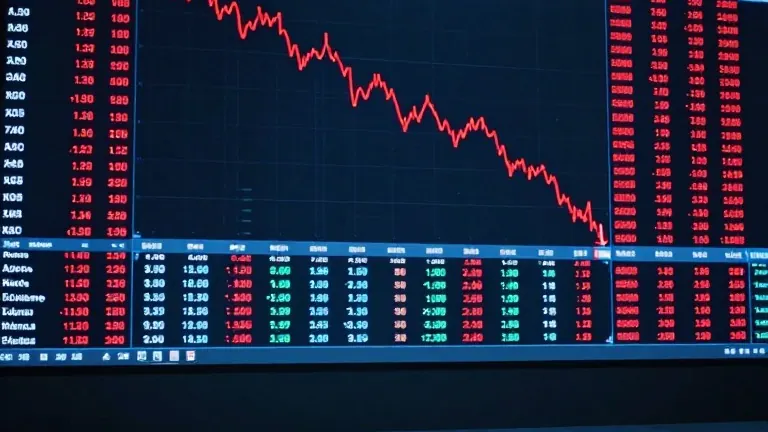
Nasdaq Slows, California Jobs Cool
Historical data shows that when the Nasdaq drops 10% or more, employment and income in the state typically decline in the following year.
By Martin Reynolds ·
Business columnist Jonathan Lansner analyzed five decades of financial data to determine how the current cooling of technology stocks affects the California economy. His spreadsheet compared movements in the Nasdaq Composite Index against state government records for employment and personal income. The analysis focuses on periods where the tech benchmark dropped by 10% or more over a twelve-month span.
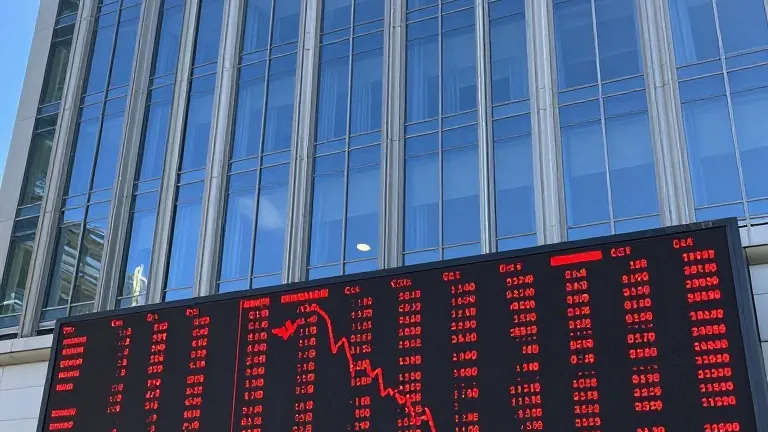
Lansner noted that while daily stock fluctuations impact individual portfolios, longer-term trends better reflect economic reality. Using one-year changes based on quarterly averages, the data shows the Nasdaq is up 8% for the year ending in October 2026. However, that one-year gain was nearly 50% as recently as April. This recent moderation signals a shift from the dramatic rally driven by hopes for artificial intelligence wealth.
The historical record indicates that tech stock crashes occur with some regularity. Since 1976, the Nasdaq has experienced a crash, defined as a 10% drop over a year, 21% of the time. The most severe downturn in this period was a 52% loss in the year ending in the third quarter of 2001.
Employment in California tends to cool after these tech market dips. In the year following a Nasdaq crash, the number of employed Californians fell 43% of the time. The steepest job loss occurred during the Great Recession, with a 5% decline in employment in the year ending in the third quarter of 2009. When tech stocks crash, the median annual growth in employed Californians drops to just 0.2%. This is a sharp contrast to the 1.6% annual increase that has been the norm since 1976.
Personal income also suffers when the Nasdaq takes a major hit. Total personal income, which tracks wages and other revenue sources, fell 18% of the time in the year after a 10% tech stock drop. The worst income decline was a 3% drop in the year ending in the fourth quarter of 2009. In years following a crash, the median growth in inflation-adjusted personal income is 2.3%, compared to the typical 2.8% increase over the past half-century.
Lansner pointed out that these market tumbles have coincided with various economic events. Three crashes occurred in the 1980s, two in the early part of the decade during a fight against high inflation and one later in the decade alongside broader market crashes. A swoon in the early 1990s matched a brief U.S. recession. The most famous crash followed the dot-com bubble, which saw the Nasdaq surge 87% through the first quarter of 2000 before collapsing. Tech stocks also crashed during the Great Recession and the pandemic.
Despite the volatility, the Nasdaq has provided strong returns for investors. The index delivered a median annual profit of 15% over the last fifty years. Lansner described the tech industry as a wealth-creation machine that holds an outsized grip on the Bay Area business climate and a major part of the state's overall economy.
The current weakness in tech stocks in 2026 could morph into an extended downturn. If that happens, the historical data suggests that California's overall business climate will face pressure. The state's job market and income levels are closely tied to the performance of these volatile tech shares.
Lansner, who writes for the Southern California News Group, reached the conclusions using a spreadsheet that tracked the Nasdaq against state economic indicators. He noted that the current situation requires attention because the tech industry's financial draw remains powerful. The analysis suggests that investors and state leaders should watch for signs that the 2026 cooldown is turning into a deeper structural shift.
The data shows a clear correlation between the Nasdaq's performance and California's economic health. When the index falls by 10% or more, the state experiences slower job growth and lower income gains. The next year will determine if the current 8% gain in the Nasdaq holds or if the state enters a period of economic contraction similar to past crashes.
More Business · Rip-Off Report · Report a business · Got a Story?