New Book Decodes the Diagnostic Clues of Joseph Bell
Medical historian Lindsey Fitzharris examines the real-life methods of the Edinburgh surgeon who served as the model for Sherlock Holmes.
By Martin Reynolds ·
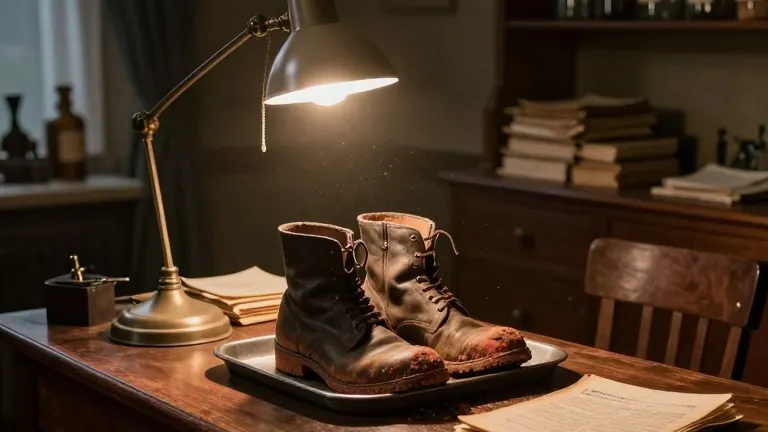
A specific detail from a Victorian infirmary case became the starting point for a new biography of Joseph Bell. The Edinburgh surgeon identified the route a patient had taken to the hospital by examining the type of clay on their boots. Sir Arthur Conan Doyle later adapted that incident for his novel The Sign of the Four. Medical historian Lindsey Fitzharris uses that clue as the entry point for her book, Sleuth-Hound: The Case of the Real Sherlock Holmes.
Fitzharris notes that Bell was renowned for his ability to deduce a patient’s occupation and personal habits through observation. He often worked alongside a local police surgeon on high-profile murder cases. His methods were distinct enough that they left a lasting mark on Doyle’s work. The new book focuses on these clinical habits rather than just the literary connection.
The author brings a medical history perspective to the subject. She previously wrote The Butchering Art in 2017, a biography of Joseph Lister. In 2022, she published The Facemaker, which profiled Harold Gillies and his work rebuilding the faces of World War I veterans. Her recent projects include a 2020 Smithsonian Channel documentary on famous deaths and an illustrated children’s book, Dead Ends!, co-authored with her husband, Adrian Teal.
Fitzharris explains that she wanted to fill a gap in the available literature. While a 1982 biography by Ely Liebow exists, it was primarily known within Sherlockian circles. She sought to write a commercial book that applies a medical lens to Bell’s life. The text explores the specific diagnostic tools Bell used to solve medical mysteries in late 19th century Edinburgh.
The book revisits the same Edinburgh setting that featured in The Butchering Art. That earlier work covered the era of body snatchers and the discovery of ether. Sleuth-Hound places Bell and Doyle within that same historical context. The narrative details how Bell’s unique approach to diagnosis influenced the creation of one of fiction’s most famous detectives.
Fitzharris conducted research to understand the specific case of the clay boots. She highlights how Bell’s observations went beyond standard medical examination. The biography presents Bell as a medical detective who used environmental clues to diagnose ailments. This approach offers a new look at the surgeon who taught a young Arthur Conan Doyle.
Source: Ars Technica