Southwest Reservoirs Gain Relief As Floods Recharge Depleted Water Systems
Storms in October and November have lifted Lake Powell by 20 feet and lifted local water restrictions in Colorado and Arizona.
By Martin Reynolds ·
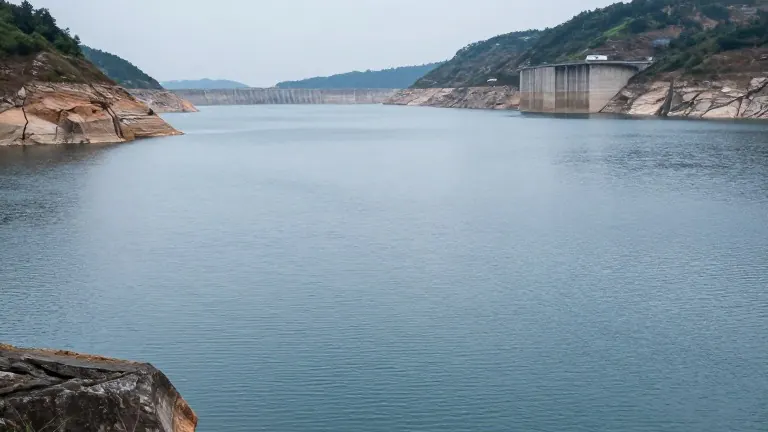
Residents in the U.S. Southwest are seeing immediate changes to local water access and supply levels following a series of intense storms. These weather events have delivered rare water to reservoirs and aquifers that had reached record lows during a yearslong megadrought. The influx of water is altering the daily operations of municipal water systems in several states.
Storms in late October and early November sent large volumes of water through creeks that are typically small or dry. The overflow flooded local communities and forced hundreds of people to evacuate. Despite the disruption to access in some areas, Martin Hoerling, a climate scientist and hydrologist at the University of Colorado, Boulder, said most of the water is now feeding depleted lakes and underground aquifers. Hoerling described the event as an unexpected boost from Mother Nature.
Lake Powell, the second-largest reservoir in the United States, rose more than 20 feet from its mid-September low. This increase dwarfs the gains seen from this year's snowmelt. However, the lake remains just over a quarter full, and 15 of its 17 boat launches were unusable as of Friday. Hoerling estimated that the floodwaters and additional rain could raise the lake along the Arizona-Utah border by over 1.2 million acre-feet. That volume is enough to support around 4 million average families for a year.
Municipal leaders in Colorado and Arizona reported tangible improvements in local water management. In Pagosa Springs, Colorado, water restrictions affecting more than 10,000 people were lifted after storms delivered about 7 inches of rain in October. Town manager David Harris noted that while the storm was destructive, it provided a good start to the winter snowpack in higher elevations. In Flagstaff, Arizona, Upper Lake Mary received more than 3 billion gallons of water since early October. Brian Huntzinger, the water production manager, stated that the recent storms dumped the equivalent of more than two years of water into the town's surface supply.
In central Arizona, heavy floodwaters trapped in homes gushed into streams that feed the Verde River. Water officials released water from two nearly full dams into the normally dry stretch of the river in metro Phoenix. Bo Svoma, principal meteorologist at the Salt River Project, confirmed these releases. Some Arizona cities have agreed to fund preliminary work to expand an existing dam on the Verde River to capture future storm runoff.
The region remains in drought despite the recent rains. The U.S. Bureau of Reclamation is unlikely to change water releases from Lake Powell until snowpack peaks, typically around April. Jack Schmidt, a professor at Utah State University, explained that the agency needs to know the snowpack levels before adjusting the distribution plan. Mary Carlson, a Reclamation spokesperson, acknowledged that conditions have improved but said considerable uncertainty remains.
Under the federal plan for the Colorado River's Lower Basin, California, Nevada, and Arizona will collectively reduce water use by 1.25 million acre-feet annually in the next two years. Nevada and Arizona are currently challenging this plan in court.