Trump's $277 Million Spend Faces Midterm Reckoning
High spending and low approval ratings put Republicans on defense as voters weigh in on the president's policies.
By Martin Reynolds ·
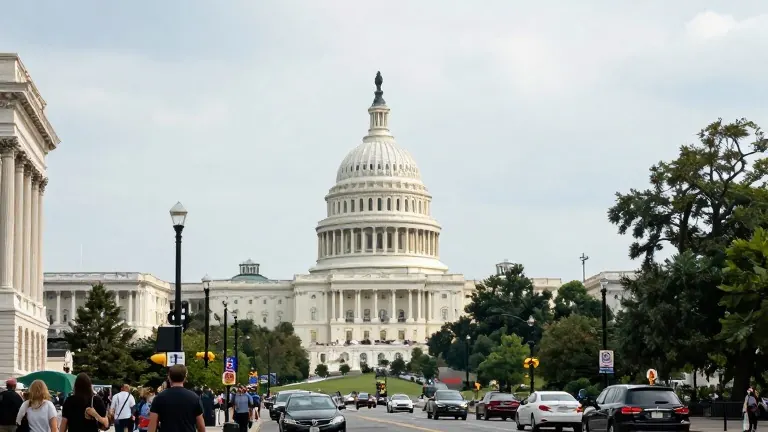
Political groups loyal to President Donald Trump spent nearly $277 million to support Republican candidates since September, a figure that puts this midterm cycle on pace to be the most expensive in history. Despite this financial outlay, the party faces mounting pressure from voters who are scrutinizing the president’s recent decisions.
The primary challenge for Republicans stems from direct links between Trump’s actions and rising consumer costs. The president imposed tariffs, initiated a conflict with Iran, and approved major renovations in Washington with little input from Congress. These moves have contributed to higher gas prices, costlier groceries, and persistent inflation. Former Democratic President Barack Obama argued in Ohio that the administration’s actions are directly responsible for these rising costs.
The Iran war, which Trump initially described as a short engagement, continues eight months later without a clear strategy for conclusion. This duration contrasts with his earlier pledge to avoid Middle East conflicts. Rep. Derrick Van Orden of Wisconsin, who is running for re-election in a vulnerable district, stated that the war is making it exponentially harder for Republicans to retain control of the House and Senate.
President Trump has shown little patience for criticism regarding affordability. He has dismissed concerns as a hoax and told a rally in Georgia that he does not give a damn about criticism of gas prices. Meanwhile, he has increased his personal wealth by taking in $1.2 billion from cryptocurrency businesses. His administration is also proceeding with a lavish renovation of the White House, including a new ballroom and a potential triumphal arch near Arlington National Cemetery.
Historical trends suggest that the president’s party often loses seats in midterm elections. In 2018, Democrats gained 40 House seats under Trump, while Republicans picked up 63 seats in 2010 under President Barack Obama. Currently, about one-third of U.S. adults approve of Trump’s performance, according to polling by the Associated Press-NORC Center for Public Affairs Research. This approval rating is lower than President Joe Biden’s rating in the same polling period before the 2022 midterms.
In competitive races, candidates are attempting to balance loyalty to the president with independence. Rep. Ashley Hinson, the Republican nominee for Senate in Iowa, said she would be Trump’s ally when it is important for Iowa but would push back on him. She recently visited an ethanol facility in Dyersville with EPA Administrator Lee Zeldin, a trip that drew questions about Trump’s deal with Russia to lower diesel prices. Hinson said the deal makes her a little bit nervous regarding the lifting of sanctions on Russia.
Democrats are leveraging these divisions in their advertising campaigns. In Michigan, a Democratic ad described Republican candidate Mike Rogers as being all in on the war and all in on Trump. However, party leaders are cautioning against overconfidence. Maryland Gov. Wes Moore noted that anger against Trump is a waning emotion and that the party must deliver on its promises. Sen. Elissa Slotkin of Michigan warned that a midterm election is a reaction to the party in power and that the results will not guarantee long-term support.
Source: Sentinel Colorado · original report published
More Politics · Aurora news · Report a business · Got a Story?