Washington and Los Angeles Move to Remove Human Drivers from Trains
Two major U.S. cities are advancing plans for automated subway lines, aiming to cut labor costs despite recent safety debates and a history of mechanical failures.
By Neha Kapoor ·
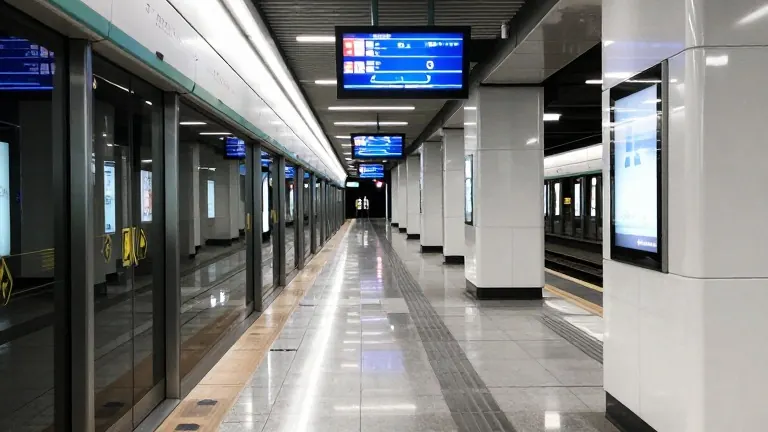
Metro officials in Washington, D.C., and Los Angeles are advancing separate projects to operate heavy rail trains without a human operator in the cab. These initiatives mark a shift in American public transit, where nearly every system currently requires a driver on board. The changes come as automated road vehicles gain traction, yet rail systems have largely resisted similar automation.
In the nation’s capital, the Metro Board of Directors approved a nearly $1 billion plan in April to upgrade the Red Line. The project includes safety features such as protective barriers that keep passengers off the tracks. If successful, trains could run without a human in the cab as early as 2033. In Los Angeles, officials are conducting an environmental review for a new underground line through the Santa Monica Mountains. This route would use shorter, more frequent trains and station doors to protect riders.
The push for automation follows a long period of hesitation in the United States. While many cities in Europe, Asia, Canada, and Australia operate unattended systems, U.S. transit agencies have lagged behind. A 2009 collision on the D.C. Red Line near Fort Totten station killed nine people and injured many others. The National Transportation Safety Board later attributed the crash to a maintenance problem in the automated signaling system. That incident halted further automation efforts for years, although the city has since restored certain automated features on its lines.
Randy Clarke, CEO of the Washington Metropolitan Area Transit Authority, told The Associated Press that the current system is highly regulated and proficient. He noted that the 2009 failure involved a different type of system than the one now being restored. Clarke said that even if trains run without operators, workers will still maintain the tracks and respond to emergencies. However, unions remain skeptical. John Samuelsen, international president of the Transport Workers Union, called automation a catastrophe waiting to happen, warning that passengers might be forced to self-evacuate in an emergency.
Honolulu offers a different perspective with its Skyline light metro, which opened three years ago and expanded last year. Vance Tsuda, the project director, stated that the system has recorded no crashes or injuries linked to automation. He argued that human operators are more likely to make errors, such as releasing a train with an open door. David King, an urban planning professor at Arizona State University, countered that public systems must maintain a perfect record to keep public trust. He compared the tolerance for failure in private industry to the stricter standards applied to government projects.
Los Angeles officials view their proposed line as a solution to severe traffic congestion between the Westside and the San Fernando Valley. Cecily Way, who oversees planning for the Sepulveda Project, emphasized that the new line would feature station doors similar to those planned for Washington. Baruch Feigenbaum, a transportation policy director at the Reason Foundation, suggested that if these two major cities succeed, they will signal to other American systems that full automation is technologically feasible and financially viable.
Source: Sentinel Colorado · original report published