Why Limon dominates Colorado highway signage
The small Lincoln County town serves as a mandatory directional reference for drivers on major interstates due to its role as a critical transportation junction.
By Neha Kapoor ·
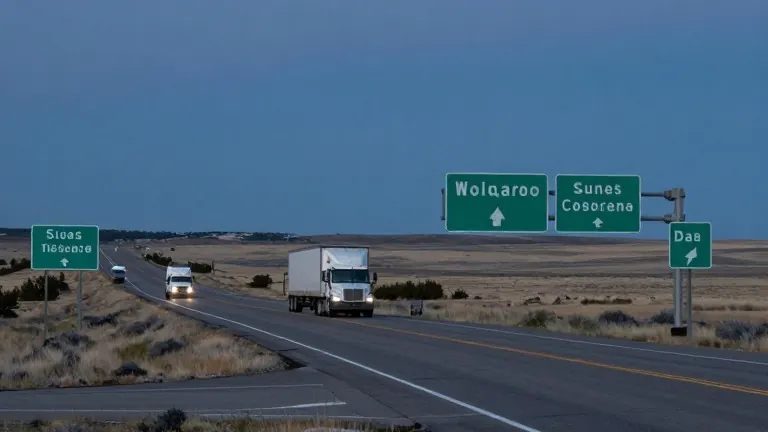
Drivers traversing Interstate 70 and other major arteries in Colorado frequently encounter road signs directing traffic toward Limon. The Lincoln County town is located approximately 1.5 hours southeast of Denver and has a population of roughly 2,000 residents. Despite its small size and limited tourist attractions, the city appears on signage across the state, often prompting confusion among commuters who have never visited the area.
The prevalence of these signs stems from Limon’s designation as a control city by the Colorado Department of Transportation. Jared Fiel, a regional spokesperson for CDOT, explained that control cities are major metropolitan areas, state borders, or important transit hubs where multiple highways converge. He stated that the signage indicates the general direction of the road rather than serving as a destination for average local commuters.
The designation is particularly relevant for long-distance drivers and truckers. Colorado Highway 24, U.S. Highway 287, and Interstate 70 all intersect in Limon. At this junction, drivers must choose between four separate highways leading to Kansas, Wyoming, Denver, or Colorado Springs. The town also functions as one of the final points in Colorado offering restaurants, hotels, retail stores, and gas stations before motorists cross the state line into Kansas.
Limon’s status as a transportation hub dates back to the late 1800s. The area was originally the site of Limon’s Camp, named after John Limon, a railroad construction foreman and supervisor in the region. The intersection of the Union Pacific Railroad and the Chicago, Rock Island and Pacific Railroad made the location a vital junction for workers and goods. The name evolved from the camp to Limon Station and eventually to the town that developed around the depot.
The town’s historical connection to rail is preserved in the Limon Railroad Depot. Built in 1910, the facility operated until 1980. The Colorado History Museum, formerly known as History Colorado, notes that the depot is now open to the public as a museum. The site includes the Limon Heritage Museum and Railroad Park, which highlight the town’s heritage as a crossroads for new workers and transportation routes.
Local cultural sites remain limited outside of the historic rail facilities. The Lincoln Theatre has been in operation since 1938 and serves as a primary venue for community events. While the town offers few other major attractions, its geographic position continues to dictate its visibility on the state’s highway network. The pronunciation of the name remains a point of distinction for visitors, as locals refer to it as Lie-mon despite the Spanish spelling suggesting Lee-mon.
The CDOT maintains that the directional signs are a standard practice for guiding traffic through complex highway intersections. By using Limon as a reference point, the agency provides a consistent landmark for drivers navigating the convergence of three major routes. This system helps clarify route choices for motorists entering the region from multiple directions.
Source: Westword · original report published