Wood fire changes how Denver chefs cook
Chefs in the city are embracing the technical demands and unique flavors of open-flame cooking despite the lack of modern controls.
By Neha Kapoor ·
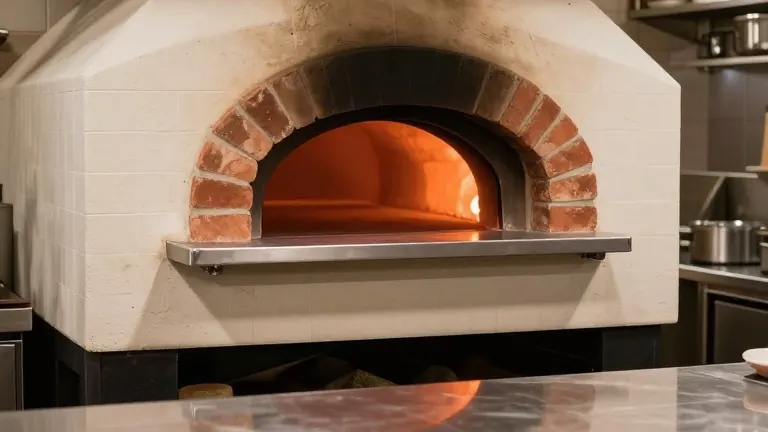
In downtown Denver, chef Justin Freeman begins his day at Monarch restaurant hours before the first customer arrives. At 9 a.m., he places six small logs of dried oak into a domed hearth. He rolls a paper bag into a tight coil and uses a blowtorch to ignite it. The flame shoots high into the curved cavity of the oven. Freeman pushes the smoldering embers to the corner of the deck and adds more wood. This process takes time because the wood-fired oven requires manual attention to reach the necessary heat.
Live-fire cooking relies on open flames rather than gas or electric burners. Freeman notes that chefs must monitor the fire continuously throughout service. A standard oven can be set to a specific temperature and left alone. A wood-fired oven requires constant adjustment of the wood and flame. Freeman describes the process as a full-day cognitive task. He tracks where the wood is, how the flame moves, and how the heat feels on his hands.
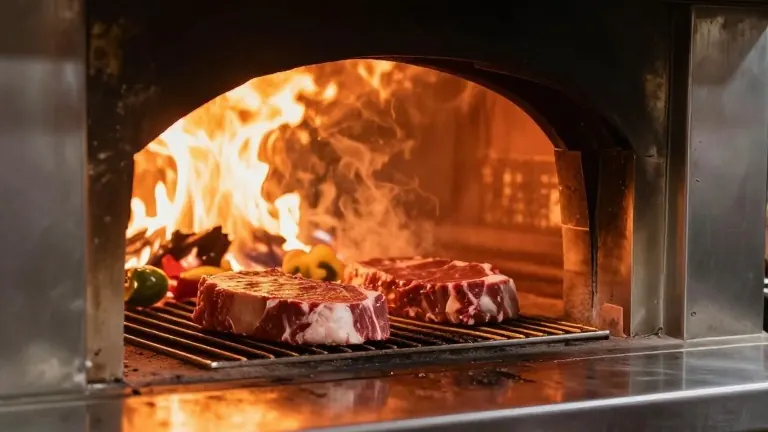
The technique produces distinct culinary results. Diners in Denver are increasingly seeking flavors that standard equipment cannot replicate. Freeman explains that the heat creates a specific mouthfeel and a lingering heaviness in the food. It draws moisture out of ingredients and adds a crispness to proteins. This flavor profile is driven by the Maillard reaction, a chemical process that browns proteins at high temperatures. The reaction is more intense at 900 degrees than at 400 or 500 degrees, creating a char that seals in flavor.
Jacob Thornton, executive chef at Cart Driver LoHi, explains the physics behind the cooking. The light from the fire emits infrared radiation that cooks the food. This radiation works similarly to the sunburning effect on skin. Darker foods absorb this energy faster than lighter foods. Thornton compares the process to wearing a black shirt versus a white shirt in the summer. The color of the food changes as it cooks, which alters how it absorbs heat. Chefs must rotate items frequently to manage these shifts in energy absorption.
The method requires precise temperature control without the aid of digital thermostats. Taylor Stark, a chef at Sheep, notes that a fluctuation of only 25 degrees can change the outcome of a dish. Maintaining a consistent temperature during service is a major challenge. If the oven cools down, the chef cannot simply turn up a dial. Stark says that 50 percent of the job is maintaining the flame or ember. Service at 5 p.m. requires the oven to be at the correct temperature, and there is no time to recover if the heat has dropped.
Michael Diaz de Leon uses a custom-made wood-fired grill at Molino Chido in Aurora. He began hosting pop-up events with this equipment during the pandemic. This work led to a residency at Bruto, where he earned one of Denver's first Michelin stars. Leon believes the smoke and ash create a depth of flavor that enhances the natural taste of ingredients. He cites grilled radish as an example of a simple item that transforms completely over fire.
Kelly Whitaker, co-founder of the company behind Bruto, has incorporated wood fire into multiple concepts. His first restaurant, Basta in Boulder, was a wood-fired pizza shop. He later applied the method at Wolf's Tailor, Denver's only two-Michelin-star restaurant, and now at Sheep. Whitaker states that committing to a wood-fired oven separates the food from other dishes. He views the fire as an essential part of his cooking identity.
Chefs use various tools to manage the heat. Some rely on laser-pointer temperature gauges to check different sections of the oven. Others use physical sensation. Freeman uses his hands to test the heat, counting to three to gauge the intensity. He describes the uncertainty of the process as the fun part of the job. The lack of automation requires chefs to stay alert and adjust to the changing conditions of the fire constantly.
The environment of a live-fire kitchen presents specific risks. At Annette in Aurora, chef Caroline Glover trains her staff to manage smoke carefully. If the electricity fails, the hood vents shut down. Excessive smoke can trigger the Ansel fire suppression system, which can shut down a restaurant for days. Glover's staff loads burning wood onto metal sheet pans and carries them outside to prevent this scenario. The intensity of managing open flames in a commercial setting requires constant vigilance and preparation for unexpected events.