World leaders failed to agree on climate plan in Turkey
The annual U.N. summit ended without a final deal after delegates argued over fossil fuels and carbon removal technologies.
By Jillian Foster ·
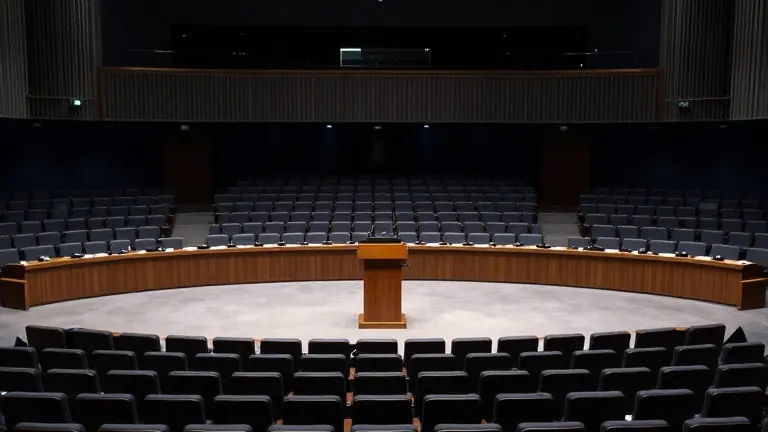
Negotiators at the United Nations climate conference in Turkey failed to reach a final agreement on Sunday. The outcome marks the first time in the summit's history that no overall text was adopted. The meeting, known as COP31, ended without a consensus on how to fight climate change. This failure occurred despite frequent extreme weather events linked to rising global temperatures.
The collapse of the talks resulted from deep disagreements over two main issues. The first concern involved the lack of language addressing fossil fuels. The second concern involved the inclusion of new technologies for removing carbon dioxide from the air. These disputes prevented nations from signing off on the final document.
The burning of coal, oil, and gas releases greenhouse gases that raise global average temperatures. Scientists have identified this process as the primary driver of climate change for decades. The standard solution involves using these fuels less over time. Countries would instead rely on energy sources like solar, wind, and geothermal power. However, reaching a unified agreement on phasing out fossil fuels remains difficult.
Major oil producers such as Saudi Arabia, Russia, and the United States have historically resisted strict transition plans. Large coal consumers like China and India have also faced pressure to commit to reductions. The absence of the United States complicated the negotiations this year. The Trump administration pulled the U.S. from climate negotiations, marking the second consecutive year the richest nation in the world did not participate.
This year's summit became the longest on record as delegates worked through overtime. Frustration mounted among participants who felt the process was stalling. Juan Carlos Navarro, Panama's minister of environment, described the situation as a case of Stockholm syndrome. He stated that participants were in love with their kidnappers, referring to the oil industry.
Navarro said the petroleum sector had convinced the world that they destroy nature to help people. He criticized the process by saying it was being held hostage by the petroleum mafia. The European Union bloc and other nations signaled they were no longer willing to voice disagreements only in closing plenaries. They wanted a stronger document to reflect the urgency of the crisis.
The draft agreements included language encouraging the scale-up of carbon removal technologies. These systems capture and store carbon dioxide, a greenhouse gas. The oil industry heavily supports these technologies. However, the methods are energy-intensive and expensive. They are not yet deployed at a large scale.
Current data shows these technologies capture and store much less than 1 percent of global greenhouse gases. The world produces an estimated 60 billion tons of these gases each year. Many delegates viewed the inclusion of carbon removal as a misguided attempt to create a small solution. Others feared it gave polluters a pass to continue business as usual.
United Nations Secretary-General Antonio Guterres reacted to the outcome by noting that temperatures keep shattering records. He stated that climate extremes keep intensifying while emissions remain far too high. Guterres warned that every delay makes the task harder and more costly. Many scientists expect 2026 to be the hottest year on record.
The next round of talks is scheduled for next year in Ethiopia. In the months ahead, officials will review what happened in Turkey. Questions about the entire U.N. climate process will likely receive more attention. Reforms have been proposed to shorten the conference and limit participation to delegates. The current two-week event has grown so large that it resembles a trade fair more than a summit.