Black voter surge drives historic Democratic wins in Southern governor races
Turnout data from Georgia shows a shift that contradicts fears that new Supreme Court rulings would weaken Black political power.
By Diego Mendoza ·
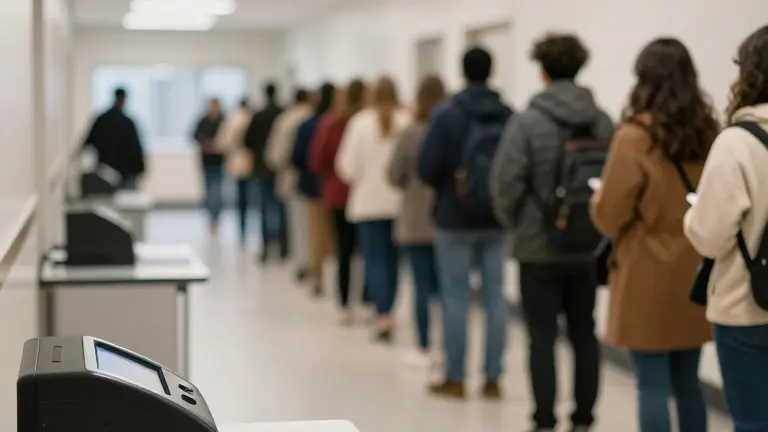
Three states elected their first Black governors this year. David Crowley won in Wisconsin. Keisha Lance Bottoms won in Georgia. Byron Donalds won in Florida. These victories occurred despite a Supreme Court decision earlier this year that struck down a key provision of the Voting Rights Act. Many voting rights activists feared that ruling would reduce the influence of Black voters in the South.
The election results suggest those fears were misplaced. Andra Gillespie, a political science professor at Emory University in Atlanta, analyzed data from her home state of Georgia. Georgia is one of the few states that collects voter turnout data by race. Her analysis shows that African American, Latino, and Asian American voters turned out at higher rates in 2026 than they did in 2022. White voter turnout in Georgia was lower in 2026 than it was in 2022.
Gillespie noted that Black and Asian American voters made up a larger share of the 2026 electorate in Georgia than they did among registered voters. This shift contributed to the overall Democratic performance in the state. The increase in participation was not limited to one demographic group but was part of a broader pattern of engagement among minority voters.
Exit polls indicate a specific shift among Black male voters. In 2024, President Trump made inroads with this group, though they still largely voted for Kamala Harris. This year, exit poll data shows a swing back to the Democrats among Black men. Gillespie attributed this shift primarily to economic concerns. The economy was the top issue for voters nationally, but in southern states like South Carolina, Georgia, and Mississippi, Black voters were more likely than the national average to cite the economy as their primary reason for voting.
The historic nature of the governor races also reflects a change in the political landscape for Black candidates. Gillespie said that a generation ago, running for statewide office was considered a risky move for Black politicians, especially Democrats in safe congressional seats. Candidates often preferred to keep a guaranteed seat rather than risk losing a statewide race. The success of Stacey Abrams in Georgia in 2018, although she did not win the governorship, demonstrated that Black candidates could be viable in those contests. This has given more politicians the confidence to run.
Redistricting played a role in the outcomes. After the Supreme Court decision, several Southern states redrew congressional maps. Experts predicted these maps would diminish Black representation. Instead, the new maps in states like North Carolina, Tennessee, and Texas diluted Republican voting strength. This created districts where Democrats could compete effectively in a wave election year.
Gillespie warned against reading too much into the 2026 results. She said Republicans miscalculated in 2024 by assuming that defections to the Republican Party represented a permanent realignment. The 2026 results show that factors like the economy drive voter behavior. Neither party should treat the current election as a predictor for future cycles.
The data from Georgia provides a concrete example of how demographic shifts affect electoral outcomes. The increase in turnout among minority voters was enough to alter the composition of the electorate. This shift helped propel candidates to office in races that many considered uncertain. The results stand in contrast to the predictions made by some experts following the legal changes to voting rights laws.