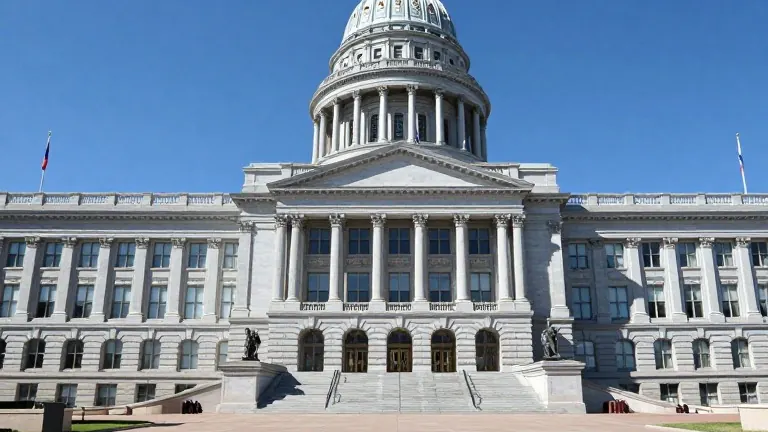
Democrats prepare to challenge Trump on economic agenda as Congress shifts
The new Democratic majority faces immediate battles over tariffs, deficits, and Social Security, while the Federal Reserve may gain independence from presidential pressure.
By Jillian Foster ·
Democratic leaders in the House and Senate are preparing to test President Donald Trump’s economic policies following Tuesday’s midterm elections. The party now holds a majority in both chambers and plans early confrontations regarding government spending and trade measures. Trump, who had warned that a Democratic victory would trigger a 1929 style depression, stated last week that he expected to work with the new Congress. "I’ll get along, probably, with the Democrats, unless they want to be destructive," he told reporters.
The central issue for the new congressional majority is inflation, which voters cited as a primary concern. A strong jobs report released Friday showed employers adding 165,000 positions and the unemployment rate falling to 4.1 percent. Despite this data, Trump maintained a defiant stance. In a text message to supporters, he wrote, "Democrats may control Congress, but I will NEVER stop fighting for you, and I will VETO anything that hurts America."
Economists note that the shift in power may benefit the Federal Reserve. Trump’s tariffs and the war in Iran contributed to the consumer price index rising to 3.7 percent annually. The president previously pressured the central bank to lower interest rates, a move that could have worsened inflation. Douglas Holtz-Eakin, president of the American Action Forum, described the Fed as a surprise winner of the election. He argued that the Democratic Senate could block Trump from filling open seats on the Federal Reserve board. This would reduce presidential influence and allow Fed Chair Kevin Warsh to aggressively target the 2 percent inflation goal.
The federal government continues to borrow approximately $2 trillion annually as tax revenues lag behind spending on Medicare, Medicaid, and Social Security. Interest payments on the national debt now exceed $1 trillion per year, surpassing military expenditures. Treasury Secretary Scott Bessent has promised a fiscal consolidation plan in collaboration with White House budget director Russell Vought. This plan aims to trim the budget deficit after the election. Marc Goldwein, a senior vice president at the Committee for a Responsible Federal Budget, stated that reducing healthcare costs offers the most immediate savings for both the government and patients.
Artificial intelligence presents a complex economic challenge. Harvard University economist Jason Furman described AI as the most significant investment boom in U.S. history, comparing it only to the late 19th century railroad expansion. Data from Furman’s Econvitals tool showed an 80.6 percent increase in data center construction over the past year. However, spending on homes, schools, and factories declined. Trump supports the sector and favors voluntary regulations over new laws. A majority of respondents in a recent AP Voter Poll indicated that AI does more harm than good for the economy.
Social Security faces a funding crisis projected to occur at the end of 2032. The program is currently unable to pay full benefits without changes. Senators who won six year terms last week will need to negotiate with Trump’s successor to sustain the system. Options include removing the cap on payroll taxes and raising the retirement age. These changes require bipartisan support to pass the Senate. Senator Elizabeth Warren of Massachusetts said she began working with Republican Senator Bernie Moreno of Ohio on a plan after hearing him discuss the payroll tax cap earlier this year.
Warren emphasized the urgency of the situation, noting that benefits could drop by nearly a quarter after 2032. She criticized inaction in Congress while millions of Americans rely on these payments. The new legislative session will test whether the divided government can resolve these structural economic issues before the next election cycle.