New spider species found living in tidal rocks on tiny Mauritian island
Researchers identified a trapdoor spider that builds silk and sand burrows in algae-covered bedrock, a habitat previously unknown for the group.
By Jillian Foster ·
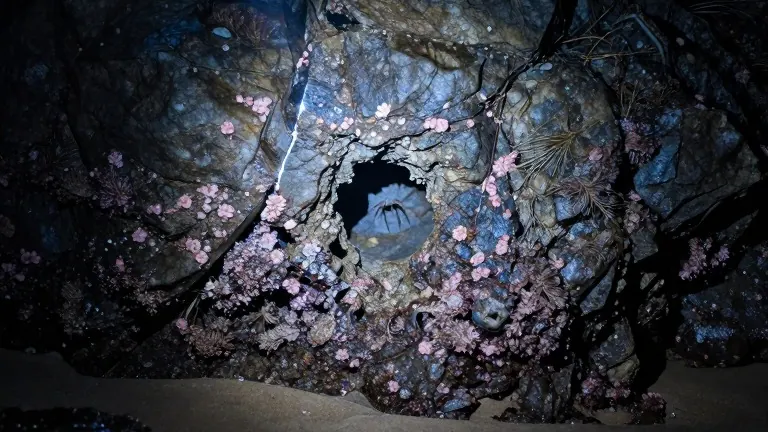
A new species of spider was identified in 2023 on a small island off the coast of Mauritius.
The creature, named Idioctis marevallum, belongs to the trapdoor spider family. It builds a burrow in rock and constructs a hinged door from silk, sand, and algae. This structure allows the spider to hide inside while waiting for prey to enter.
The spider was found on Ilot Vacoas, a one-hectare island. The landmass is so small that a person could walk across it in approximately 30 seconds. The species inhabits bedrock made of coralline algae, a pinkish substance that helps bind reefs together. Thousands of years ago, molluscs and worms bored through this rock, creating the tubes where the spiders now live. The spiders seal these tubes to protect themselves from the rising tide.
The discovery was made by Dr. Max Tercel, an entomologist with the Durrell Wildlife Conservation Trust. He was surveying the intertidal zone at night when he noticed eight legs extending from a crevice in the bedrock. Tercel was using a headtorch to examine the rocks when he saw the familiar pattern of a spider emerging from a burrow. He had previously only seen trapdoor spiders in forests and grasslands.
Tercel called his colleague, Nik Cole, to inspect the find. Cole said he was surprised to see a mygalomorph, a group that includes tarantulas, in such a coastal environment. The pair used a weak phone signal to research the find. They initially believed they had found Tigidia mauriciana, a trapdoor spider first described in 1892 but never observed again. A paper published in the journal Arachnology confirmed the finding was a new species.
The Durrell Wildlife Conservation Trust, the Mauritian Wildlife Foundation, and local parks officials have worked for several years to restore the island. Mauritius has experienced a decline in biodiversity due to climate change. Adam Hart, a professor of science communication at the University of Gloucestershire, noted that most trapdoor spiders live on dry land. He said finding this species in coastal rock that is drenched by high tide daily raises questions about how it survives repeated exposure to seawater.
The United Nations estimates that more than one million wildlife species are at risk of extinction as humans alter natural habitats. Hart noted that spiders are often overlooked because they are small and secretive. He added that finding a new species on a tiny island that conservationists had already visited for years shows that discovery does not always require exploring remote wilderness.
The researchers published their findings in the journal Arachnology. The paper details the spider's habitat and physical characteristics. The discovery adds to the known diversity of the region. Conservation teams continue to monitor the island to protect its unique wildlife.
Source: Metro