Palisade wineries cut back production as Colorado wine sales drop
Local vintners are pulling vines and diversifying events to adapt to a sharp decline in regional consumption since 2020.
By Diego Mendoza ·
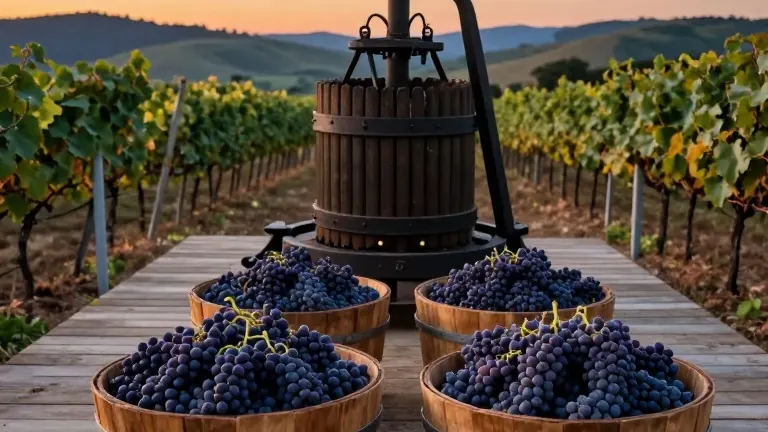
At Sauvage Spectrum Estate Winery in Palisade, fresh Mourvèdre grapes sat on a loading dock this fall, destined for fermentation tanks. These clusters avoided the fate of many other Grand Valley grapes, which are being left to drop from the vines because there is no market for them. The valley produces the majority of Colorado’s wine grapes, but a slump in sales is forcing local producers to rethink their operations.
Colorado wine sales have fallen 19% since 2020, when pandemic isolation boosted demand for alcohol at home. Consumption in the state sagged another 6.2% during the first part of 2026. Kyle Schlachter, executive director of the Colorado Wine Board, described the industry as wobbling. Last year, no buyers were found for one-third of the 500 acres of grapes grown in the Grand Valley American Viticulture Area. The year before that, about 20% of the harvest did not end up in fermentation tanks.
For the past three years, more grape vines have been removed from the ground in the Grand Valley than planted. Kaibab Sauvage, who has grown grapes in the area for nearly 25 years, is discarding three to four bins of unclaimed Mourvèdre this year. He is also planning to rip out one acre of his Malbec vines. Onyx Cly-Peek, assistant manager at Grande River Vineyards, said the winery is being strategic by not producing more wine than it needs. Grande River has grown grapes since 1987 but has sold off most of its land, leaving it with 13 acres of vines.
Some vintners are importing cheaper out-of-state grapes to manage costs. Growing grapes in Palisade, located in North America’s highest-altitude American Viticulture Area, is expensive due to wide temperature fluctuations and damaging storms. Kevin Webber, CEO of Carboy Winery, said bears destroyed a chardonnay vineyard this year. The company, which is the largest wine operation in Colorado, had to bring in out-of-state grapes to make up for the loss.
Alexandra Mize, executive director of the Colorado Association for Viticulture and Enology, is promoting several initiatives to help the sector. Her organization is running a program called Colorado Cru to link growers with buyers for specific varietals. A new High Elevation Wine Program under the Colorado Wine Board will recognize restaurants and bars that serve local wines. Mize is also recruiting wine ambassadors to promote Colorado products and is partnering with Horizon Verjus Company in Littleton to turn unripe grapes into cooking juice.
Wineries are also changing how they operate to draw visitors. Nearly all Grand Valley wineries have added entertainment to their tasting rooms. Activities include concerts, yoga, knitting circles, book clubs, and comedy nights. Barbie Barnwell, sales and hospitality manager for Carboy Winery’s Palisade location, said the winery thinks of itself as a venue with a winery attached. She noted that people know there is always something happening there. Other local spots like Restoration Winery and Mafia Princess Wines have built reputations for their events alongside their wine sales.
Despite lower production volumes, the quality of Colorado wines has improved. Horst Caspari, a viticulture professor at Colorado State University, said the state is making some of its finest wines ever. Recent competitions have reflected this shift. In the Governor’s Cup awards announced on Oct. 17, 10 of the top 12 wines in a blind tasting were made from Grand Valley grapes. Storm Cellar near Paonia took the top prize, while Carboy Winery won five awards. James Suckling, a renowned wine critic, rated 36 Colorado wines at 90 points or more in a recent Forbes article.
The financial outlook remains cautious. Excise taxes on grapes, which fund the state wine board, have dropped from $833,000 in 2020 to $750,000 last year. Schlachter said the industry is contracting but is not in danger of disappearing. Bruce Talbott, who grows about a quarter of the state’s wine grapes near Palisade, called the situation concerning but not catastrophic. He expects the industry to bounce back in four years and is using the current overstock to replace old vineyards with better rootstock.
Source: The Colorado Sun · original report published
More Business · Denver news · Rip-Off Report · Report a business · Got a Story?