Salmon Bycatch Drives Alaska Senate Campaign
Indigenous residents blame offshore trawlers for emptying their rivers, turning a local resource conflict into a national political battle.
By Jillian Foster ·
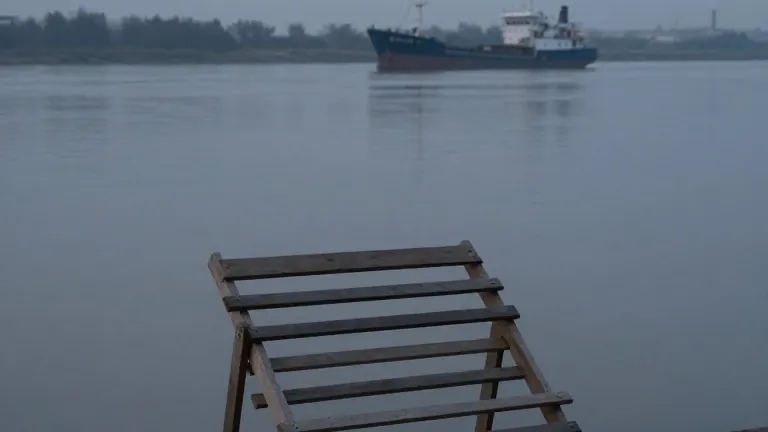
Republican incumbent Sen. Dan Sullivan and Democratic challenger Mary Peltola have turned the Kuskokwim River into a central stage for their campaign. The conflict centers on the declining number of salmon returning to Western Alaska, a problem that has split the state between industrial fishing interests and subsistence communities.
Evon Waska, who lives at the water's edge where his parents settled, says his drying racks remain empty. He attributes the loss to industrial trawlers operating miles offshore in the Bering Sea. These vessels use sock-shaped nets, some a quarter mile long, to harvest pollock. The pollock is often sold as imitation crab, but the nets also catch king salmon and other species. Waska argues that government agencies close rivers to local fishers to conserve stocks while leaving the trawlers open.
Sullivan, who has historically supported the pollock industry, introduced legislation this year to address the issue. He described the measure as the most comprehensive bycatch legislation ever proposed. The bill aims to reduce accidental catches and protect seafloor habitats. Peltola, an Indigenous member of the Kuskokwim community, criticizes the timing and scope of the bill. She stated that Sullivan waited until the eleventh hour for a half-baked solution after accepting over $300,000 from trawler companies.
Peltola proposes banning factory trawlers, the largest vessels in the pollock fleet. She calls Sullivan's legislative effort an election-year ploy. Political ads in Alaska now frequently feature the debate. One ad praises Sullivan for championing bycatch reduction, while another accuses him of taking big money from out-of-state corporate trawlers. A third ad, supporting Peltola, claims she tells fish tales to secure votes.
Industry leaders dispute the idea that trawlers are the primary cause of the decline. Heather Mann, who leads a trawlers association, said eliminating the pollock fishery would have minimal impact on restoring salmon runs, according to current science. She argues that scapegoating the industry will not help Western Alaska. Traders report that their vessels have caught 40,000 Alaska salmon so far this year. While this number represents a small percentage of the total pollock harvest, it remains a source of anger in remote villages.
In the village of Kwethluk, subsistence fishing serves as the main occupation and the backbone of local culture. Tribal president Mary Nikolai visited a neighbor's cold smokehouse that sat unused all summer. She noted that most local smokehouses remain empty, describing the situation as a slow trend of closing the workforce out. The issue has gained national attention as President Trump moves to preemptively block election results in Alaska should the Republican incumbent lose.
The race has become a proxy for a larger debate over resource management. For residents in the Kuskokwim basin, the absence of salmon is an immediate daily reality. For voters in Washington, D.C., the outcome could shift the balance of power in the U.S. Senate. The conflict pits a $1 billion industry based largely in Seattle against communities that have relied on the river for generations.
Source: WWNO