U.N. Chief Warns 1.5 Degree Target Is Dead Before Final Climate Summit
António Guterres reveals scientists informed him last year that limiting warming to 1.5 degrees Celsius is no longer possible, shifting the focus to minimizing overshoot during COP31.
By Martin Reynolds ·
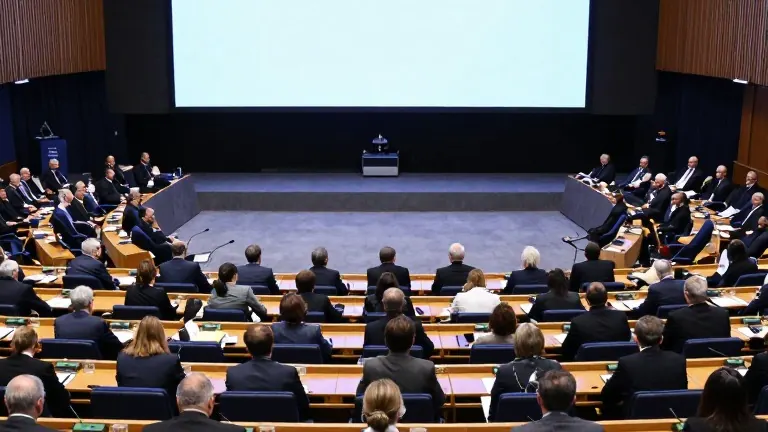
António Guterres told The Associated Press that scientists informed him last year that the goal of limiting global warming to 1.5 degrees Celsius above pre-industrial levels is no longer achievable. The United Nations Secretary-General, whose second and final term ends this year, described the moment as one of the most difficult of his life. He had planned to argue the 2015 Paris Agreement target remained alive, but researchers told him the world had already emitted too much carbon dioxide to stay below that threshold. Now, the U.N. is attempting to limit how far temperatures rise past that mark.
Guterres will deliver this message at the COP31 climate conference in Turkey, scheduled for November 9 to 20. He plans to tell world leaders that this is a moment of truth, urging them to stop endless discussions and push responsibility to others. He stated that everyone must do more now. The urgency of his tone reflects a tenure in which he has repeatedly warned of rising temperatures and extreme weather, including his 2023 declaration that the era of global boiling had arrived.
The Secretary-General attributed the failure to reach the 1.5 degree limit to political leadership rather than the world itself. He argued that many political systems lack a long-term strategic view, with policies changing frequently and preventing the consistent investment needed to protect the planet. Guterres pointed to his time as Portugal’s prime minister in the late 1990s as proof that long-term investment in a greener future is possible. He cited the global rise in wind and solar power as a source of hope, noting they are becoming cheaper alternatives to fossil fuels.
His personal connection to the crisis deepened after a 2023 tour of Nepal’s high peaks, where he warned of flooding from swelling glacier-fed lakes. Those warnings materialized sooner than expected when floods in August killed more than 1,400 people and left 5,600 missing. Scientists confirmed climate change played a role in the disasters. Guterres said the victims often did not cause the problem, arguing that fossil fuel companies should be taxed on windfall profits to support nations suffering dramatic impacts.
Former U.S. Vice President Al Gore praised Guterres for being forceful and right on target in addressing the crisis. Laurence Tubiana, CEO of the European Climate Foundation, said Guterres pushed the issue farther than any other Secretary-General, even in adversarial contexts. Guterres acknowledged that his position holds no real power because nations are not forced to follow U.N. requests and superpowers retain veto authority. He said the organization has little money but possesses a voice.
Guterres noted that current threats, including wars in Ukraine and Iran and the energy consumption of artificial intelligence, are combining to exacerbate the climate crisis. He warned that relying on fossil fuels is a fundamental security problem. As he prepares to leave office, Guterres advised his successor to tell the truth. He wants the public to remember that climate change is an existential threat that must be fought for survival.