
Ukraine Sinks Russian Corvette in Libya Port After Drone Strike
President Zelenskyy praised a naval drone operation that sank a Russian warship in Benghazi, marking a significant escalation in the conflict's maritime reach.
By News Media House Staff ·
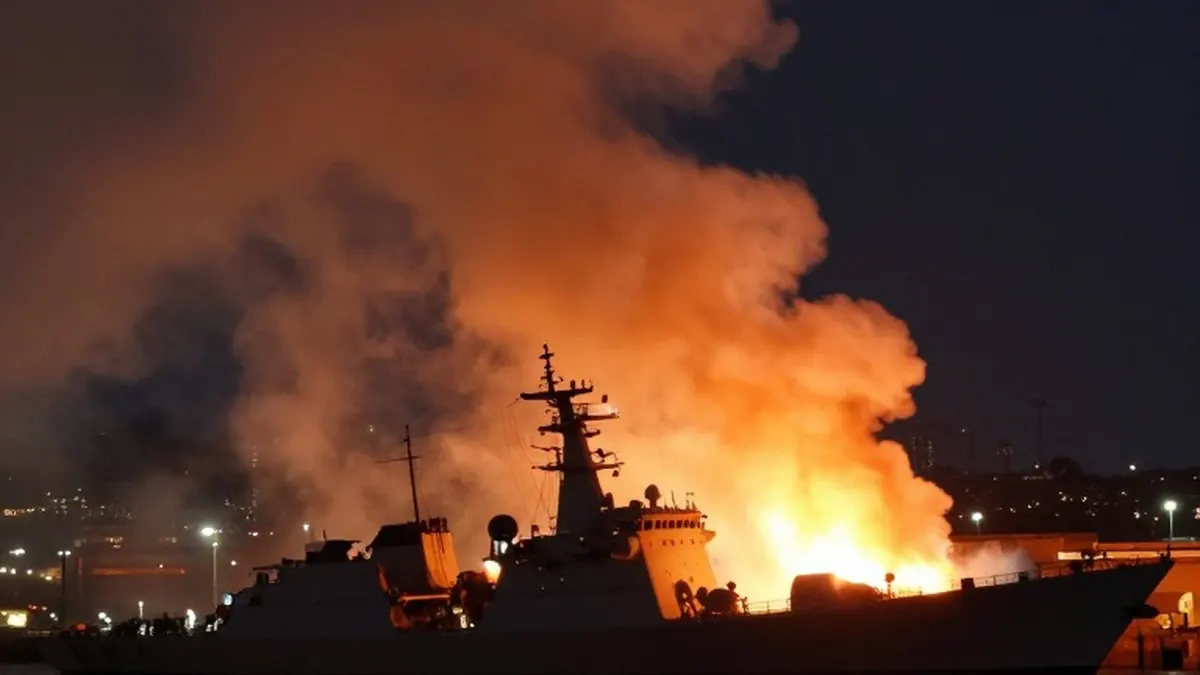
Ukrainian President Volodymyr Zelenskyy commended his military on Monday for an operation he described as exemplary, which resulted in the sinking of a Russian warship in a Libyan port. The strike was carried out using several domestically produced naval drones, marking a significant development in the ongoing conflict between the two nations.
The incident occurred in the early hours of Sunday morning when Ukrainian forces targeted the Merkury, a Russian Navy corvette, at a port in Benghazi. Zelenskyy shared dramatic video footage on social media that showed the drones triggering a massive explosion on the vessel. He noted that the ship was one of Russia's newest assets, having been commissioned in 2023 during the full-scale war.
Satellite imagery captured on Sunday confirmed the severity of the damage, showing the Merkury mostly underwater after it had capsized. The President stated that despite the enemy's efforts to counter the attack, the corvette was successfully sunk. He added that Ukrainian forces would continue their operations in designated waters to maintain pressure on Russian naval capabilities.
This latest strike follows a series of recent incidents involving Russian assets. On Saturday, Ukrainian forces allegedly struck a Russian cargo ship in the Baltic Sea. Additionally, the events took place less than a week after damage was inflicted on the Crimea bridge, a structure often highlighted by Russian President Vladimir Putin. The pattern of attacks suggests a sustained campaign against Russian maritime and logistical infrastructure.
In addition to the corvette, Ukrainian forces hit the MV Angara, a Russian dry cargo ship that Zelenskyy said was used to transport weapons. A Ka-27 military helicopter associated with the vessel was also struck. The Kremlin did not immediately respond to a request for comment from CNBC regarding the specific details of the Benghazi attack.
The Security Service of Ukraine, or SBU, issued a statement on Monday highlighting the strategic implications of the attack. According to a translation of their Telegram message, the operations demonstrated that the Russian military fleet and its logistics have no safe routes, even far beyond the Black Sea. The SBU argued that such unique special operations destroy the enemy's logistical capabilities and force Russia to pay for its aggression at a strategic distance from Ukraine.
The United Nations Support Mission in Libya expressed serious concern over the drone attacks in a public statement. The mission noted that the country must not become a battleground for foreign conflicts, emphasizing that Libya cannot afford the disruption. UNSMIL called for an immediate, independent, and transparent investigation to establish the facts and hold those responsible to account.
This is not the first time that attacks linked to the Russia-Ukraine war have occurred near Libyan territory. In March, the Russian Transport Ministry accused Ukraine of attacking the Arctic Metagaz, a liquefied natural gas tanker. That incident was part of a suspected sea drone attack in the Mediterranean Sea between Libya and Malta, further illustrating the expanding geographic scope of the naval conflict.
The sinking of the Merkury in a port rather than open waters underscores the reach of Ukrainian drone technology. By striking a target in North Africa, Ukrainian forces have demonstrated the ability to project power across multiple theaters. The continued use of domestic drones highlights the country's focus on self-reliance in its defense production and operational strategy.
As the conflict enters its later stages, both sides continue to seek advantages through precision strikes on high-value targets. The reaction from international bodies like the UN and the strategic commentary from the SBU suggest that these maritime engagements are becoming a central pillar of the war's broader dynamics. The situation remains fluid as both nations assess the impact of these recent losses and plan future operations.
Originally published by News Media House
More News · National news · Report a business · Got a Story?