Denver voters approve new sales tax for rail line to Pueblo
Initial results show 55% statewide support for Issue 7A, a measure to extend the Colorado Connector service.
By Jillian Foster ·
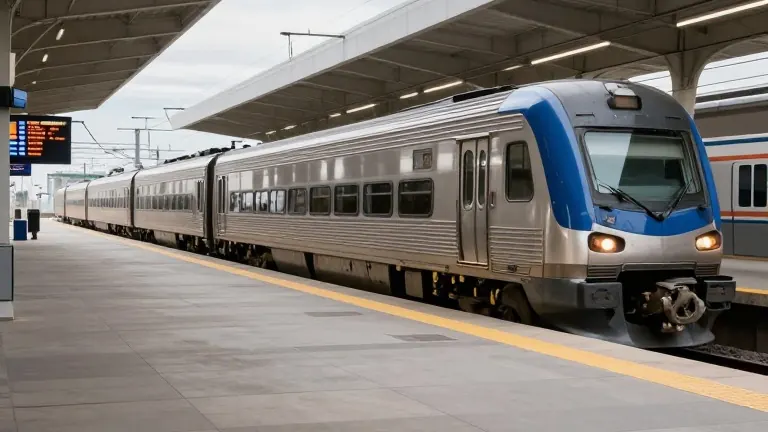
Voters in Denver and across the Front Range approved a new sales tax on Tuesday night to fund passenger rail service between Pueblo and Fort Collins. Initial unofficial results from the Colorado Secretary of State’s office show 55% of eligible voters supporting Ballot Issue 7A. The measure passed with a clear majority in Denver, where 65% of voters favored the proposal just before 9 p.m. on Tuesday.
The tax will fund the expansion of the Colorado Connector, commonly known as CoCo. It adds a 0.333% sales tax to purchases in the rail district. That equates to 3.3 cents on every $10 spent. The revenue will build, maintain, and operate the new rail line. The district covers parts of Adams, Arapahoe, Boulder, Broomfield, Denver, Douglas, El Paso, Jefferson, Larimer, Las Animas, Pueblo, and Weld counties.
Sal Pace, general manager of the Front Range Passenger Rail District, called the result a landslide victory. He noted that the project has been in development for decades. “This is a monumental decision by Colorado voters and a historic step toward connecting communities up and down the Front Range,” Pace said in a statement. He added that the new service aims to reduce traffic, boost the economy, and give residents more travel options.
Governor Jared Polis attended a private campaign watch party at The Cherry Cricket in Denver. He described the outcome as one of his final campaign promises being fulfilled. “As a Front Range resident, I can’t wait to ride the train,” Polis said by phone from the event. Campaign spokesperson James Owen offered a more cautious read of the early numbers. “It’s trending in the right direction, but… you don’t call it before the game’s over, and we’ve still got more votes to count,” Owen said.
Support for the measure varied by county. Unofficial tallies showed large majorities in favor in Denver, Larimer, Boulder, Broomfield, Pueblo, Douglas, and Weld counties. Conversely, voters in El Paso, Jefferson, Adams, Arapahoe, and Las Animas counties voted against the tax by varying margins. The split reflects the district’s geographic reach, which spans both urban centers and suburban communities along the I-25 corridor.
The rail line will include new or upgraded stations in Littleton, Sterling Ranch in Douglas County, Colorado Springs, and Pueblo. Rail district officials plan to launch three daily trips between Denver and Pueblo. They also aim to add a fourth daily trip to Fort Collins. That northern extension is scheduled to launch in 2029, regardless of the outcome of this ballot measure.
This is the first ballot measure for the Front Range Passenger Rail District since the state legislature created the agency in 2021. The district’s Board of Directors voted to put Issue 7A on the ballot in late August. The campaign faced a logistical challenge when election officials discovered that approximately 800,000 ineligible voters received ballots with the tax measure printed on them. This error occurred because the district failed to update county clerks on voter eligibility lists after a boundary change approved by state lawmakers in 2026.
County and state election officials stated that only eligible voters would be counted in the final tally despite the mailing error. In response to the issue, the rail district’s board hired Pam Anderson as the new designated election official. Anderson previously served as Jefferson County Clerk and ran for Secretary of State. She took over oversight of the measure after the district’s previous election official resigned following the discovery of the ballot error.
Source: The Denver Post · original report published