Erosion Shaped the Flat-Topped Mountains of the Southwest
Wind and gravity carved the iconic mesas that served as fortresses for Native Americans and backdrops for Hollywood films.
By Martin Reynolds ·
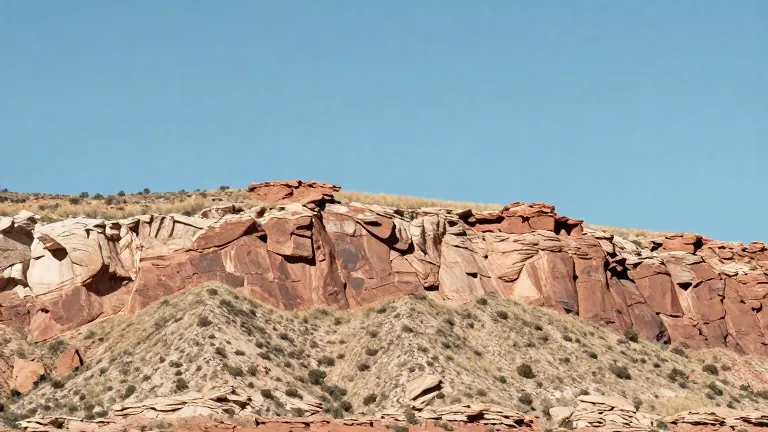
Millions of years of wind and gravity carved the flat-topped mountains known as mesas across the American Southwest. Spanish explorers gave these formations the name, a word meaning tables, when they first encountered them. Geologists define a mesa simply as a flat-topped mountain or hill created by constant erosion.
The high elevation provided natural defenses for the region's original inhabitants. The tall sides offered vantage points and protection from outside threats. These sites remain sacred landmarks with deep spiritual connections for local communities. Old Oraibi, a Hopi village in Northern Arizona, sits on one such mesa. Dating to 1150, it stands as the oldest continuously inhabited community in the United States.
Film directors frequently used the distinct red rock formations of the Southwest for their cinematic value. John Ford selected the mesas and buttes of Monument Valley in Arizona as backdrops for his Western, Stagecoach. He used the same location for many other films. Stanley Kubrick chose Monument Valley to depict an alien landscape at the end of 2001: A Space Odyssey. In that sequence, astronaut Dave Bowman passes through a portal known as the Stargate.
The landscape also holds a place in modern scientific history. Robert J. Oppenheimer selected a mesa in New Mexico as a secret site for elite scientists. This group worked together to determine how to split the atom and create a nuclear weapon. The Los Alamos Scientific Laboratory continues nuclear research on that site today.
Acoma Pueblo in New Mexico sits on a mesa that rises 365 feet above the surrounding land. The community had existed for centuries before Hernando de Alvarado of the Coronado expedition arrived in 1540. The San Esteban del Rey Mission stands on this same mesa. Builders constructed the church between 1629 and 1640. They carried all construction material, including the earth used for the cemetery, up the steep slopes by foot.
A cemetery on the mesa holds the graves of tribal veterans who died in U.S. wars. The site includes the mission church and the resting places of those who served. The rock formations that make up the mesa reflect the millions of years of geological activity that shaped the region.
The article is part of a series titled American Objects, which marks the 250th anniversary of the United States.