Hiker rescued after overnight ordeal on Frigid Air Pass near Crested Butte
A woman was pulled from deep snow at 12,400 feet after her phone battery dropped to 10% during a solo hike.
By Jillian Foster ·
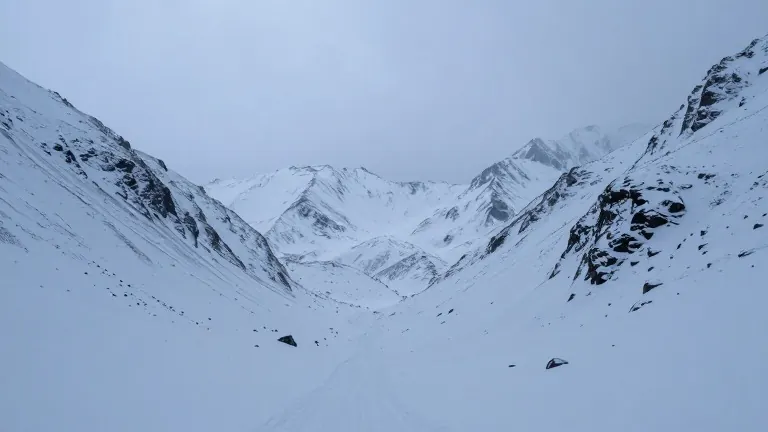
A 37-year-old woman spent the night of October 29 on a high mountain pass before a multi-agency team rescued her from deep snow and steep terrain. The incident ended with a helicopter hoist operation that concluded later that morning, leaving the hiker safe but exposed to the elements for several hours.
The woman was hiking alone on the Four Pass Loop, a route connecting Aspen and Crested Butte. She sent a text message to 911 late on October 29 that simply read, "Please help me." At the time of the message, her phone battery was down to 10%, and she was struggling with snowy conditions near Frigid Air Pass, which sits at 12,400 feet.
CareFlight of the Rockies accepted the initial call to help locate the hiker. Crested Butte Search and Rescue also dispatched a ground team of five rescuers on foot. Around 3 a.m., the ground team reached the top of the pass and spotted the hiker below them. The descent was complicated by deep snow, steep terrain, and avalanche concerns.
Rescuers reached the hiker by 6 a.m. She was suffering from exposure and could no longer walk on her own. The rescue operation ultimately required a helicopter hoist. This involved the Colorado Army National Guard and specialized rescue technicians from Vail Mountain Rescue Group. The woman was safely extracted later that morning.
Theresa Blake Graven, the public information officer for the Colorado Avalanche Information Center, noted that heavy snowfall and strong winds can rapidly create unstable snow on steep slopes. She warned that early in the season, even a relatively small avalanche can be dangerous because it can carry someone into exposed rocks or other obstacles.
Graven advised backcountry travelers to avoid steep, snow-covered slopes, particularly where wind has loaded snow. She said terrain with shallower slopes, less than about 35 degrees, that is not connected to avalanche paths is generally safer. "The key takeaway is that conditions can change during an outing," Graven said. "A route that was relatively stable on the ascent may be dangerous on the way down, so backcountry travelers should continually reassess conditions and be prepared to change their plans."
The National Park Service recommends that hikers turn around when a trail becomes too difficult to travel safely or when they lack the appropriate gear. In Colorado, afternoon thunderstorms are common during summer, but winter weather can move in at any time of day. Above treeline, there is little protection from wind, lightning, or falling snow.
The Colorado Search and Rescue Association advises people who are lost to slow down, make a plan, and avoid continuing toward a goal. If you have already contacted emergency services, stay where you are. Rescuers will use your last known coordinates, and moving can make it harder for them to find you. The association also recommends texting 911 when possible because it uses less phone power. Carrying a satellite messenger is also advised due to better battery life and the ability to send an SOS.
In their incident report, Crested Butte Search and Rescue reminded people to do their best to be prepared. "As this rescue demonstrates, help can take considerable time to arrive, especially in remote locations and challenging conditions," the report stated. "Even with helicopters and other specialized resources available, an evacuation is never guaranteed to be quick or straightforward. So throw that extra puffy in your pack!"
Source: The Colorado Sun · original report published