San Juan River hits 16.81 feet as Pagosa Springs floods again
Heavy rains in the Four Corners region have caused widespread damage, with over 20 trillion gallons of water reported in two weeks.
By Jillian Foster ·
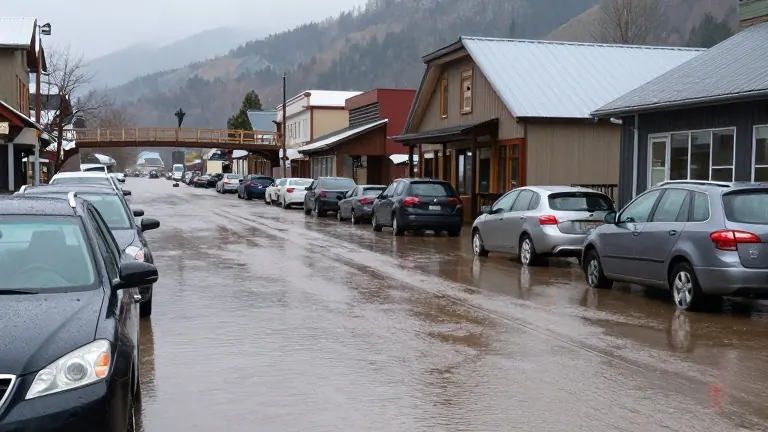
Floodwaters surged through Pagosa Springs, Colorado, on Monday after a new round of heavy rain hit the town.
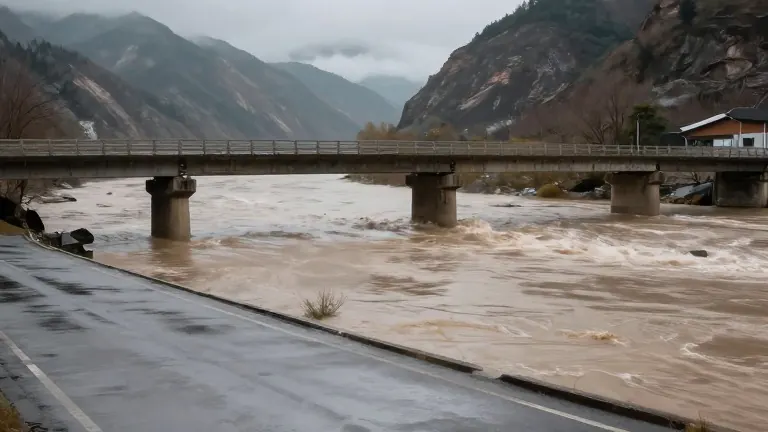
The San Juan River reached a height of 16.81 feet late Sunday before receding on Monday, according to the National Weather Service. This level is close to the 17.8 feet recorded during the 1911 flood that nearly destroyed the community of 2,000 residents. Vicki Shaffer, a spokesperson for the Archuleta County Sheriff’s Office, said a home was lifted from its foundation and crashed into a pedestrian bridge. She also reported that a section of a road bridge west of town buckled under the force of the water.
First responders searched for stranded residents on Monday, conducting at least one helicopter rescue. Shaffer noted that the county did not have a specific count of residents under evacuation orders. The Colorado Department of Transportation is currently checking if closed bridges and roadways are safe to reopen. The town had lifted an evacuation order from last week but reimposed it on Saturday.
The flooding is part of a larger weather pattern driven by El Niño, which the National Weather Service said could bring isolated cloudbursts across the Four Corners region. Ryan Maue, a former NOAA chief scientist, calculated that more than 20 trillion gallons of rain fell on the Four Corners states and Nevada in the past two weeks. In New Mexico, evacuations were ordered along the San Juan River and in the village of Chama. Durango police Chief Brice Current said many people in southwestern Colorado were still stranded along the Animas River.
Record rainfall also affected Arizona, where meteorologist Jennifer Tate of the NWS Weather Prediction Center described the system as very broad. Flagstaff received 5.15 inches of rain over two days, marking its wettest November 1 on record. A man named Williams Singavarapu, 73, was found dead in Flagstaff, and a second man was found dead in a drainage area. In Utah, Ryan Benally, a professor at Utah State University, said the storms have compounded in ways residents were not prepared for.
Cleanup efforts began immediately in affected areas. In Durango, Willow Bradner stayed in a hotel after her home flooded, with two feet of mud surrounding the house. Greg Ewing participated in a group of about 200 community members who used shovels and skid steers to remove the mud. The Colorado Secretary of State’s office arranged alternative voting plans for residents who were evacuated or stranded.
Officials expect cleanup and repair work to take weeks. One person died in the floodwaters, and police suspect a second death was weather-related. The weather service warned that isolated cloudbursts remain possible as the system continues to disrupt patterns in the region.
Source: Sentinel Colorado · original report published