U.N. troops pull out of Western Sahara after 35 years
A stalemate between Washington and Moscow at the Security Council ended the MINURSO mission, leaving a disputed desert region without international peacekeepers.
By Neha Kapoor ·
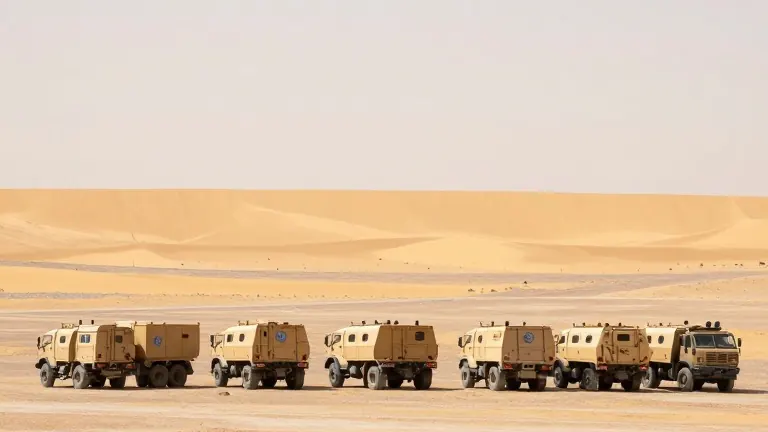
U.N. peacekeeping operations in Western Sahara ended Sunday after 35 years of service.
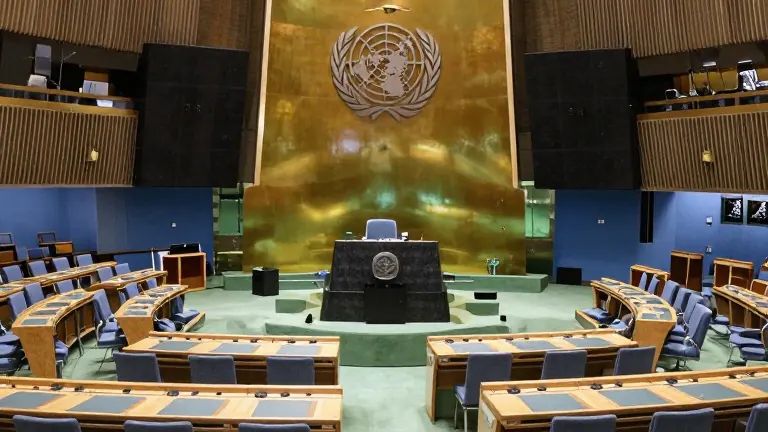
The departure follows a deadlock at U.N. headquarters between the United States and Russia. On Friday, the Security Council failed to agree on the future of the mission. Russia vetoed a U.S. draft resolution that supported Morocco's sovereignty claim and planned to end the force next year. A competing Russian proposal to extend the mandate was then defeated by a vote. This split left the mission without a legal basis to continue.
Stephane Dujarric, spokesperson for the U.N. secretary general, confirmed the timeline. He stated that November 1, 2026, marks the start of the liquidation period. A smaller team under the United Nations Department of Operational Support will now manage the process. Their task includes moving assets back to troop-contributing countries and disposing of U.N. equipment.
Western Sahara is a vast desert territory along Africa's northwestern Atlantic coast. It is roughly the size of Colorado and rich in minerals and fisheries. The land was once ruled by Spain. Today, Morocco controls nearly all of it, while the pro-independence Polisario Front claims the rest. Morocco administers the area except for a narrow strip called the free zone, which lies east of a Moroccan-built sand wall.
The conflict has deep roots. After Morocco annexed the territory in 1975, an armed conflict lasted more than 15 years. According to the French Senate, more than 16,000 people on both sides died. The U.N. established the Mission for the Referendum in Western Sahara, or MINURSO, in 1991 to monitor a cease-fire. The plan included a referendum on self-determination, but the vote never happened. Morocco and the Polisario Front disagreed on voter eligibility. Morocco wanted to include residents in the territory it controls. The Polisario Front preferred using Spain's colonial census to determine who could vote.
Reaction to the mission's end was mixed. Morocco's royal palace welcomed the decision, calling the mission an instrument to internationalize the dispute. The Polisario Front, backed by Algeria, described the decision as unacceptable. The Algerian foreign ministry expressed profound regret. It criticized the U.S. draft resolution for excessive bias. Algeria arms, funds, and hosts the Polisario Front. The two regional powers severed diplomatic ties in 2021. The end of the mission risks straining those ties further.
The U.N. force was authorized to have 534 personnel. Its budget for 2026-2027 exceeded $62 million. Egypt, Ghana, and Pakistan were the top military contributors. Twenty MINURSO personnel lost their lives during the mission's history. The U.N. secretary general called on all parties to respect the rights of the people of Western Sahara. He expressed concern about the security situation and the risk of hostilities escalating.
Last month, the U.N. noted that the territory has remained a scene of tensions and low-intensity hostilities. The Polisario Front withdrew from the cease-fire in 2020 after clashes. The U.N. classifies Western Sahara as a non-self-governing territory. Critics of Moroccan control describe it as Africa's last colony. Morocco refers to the land as its southern provinces and has secured backing from Washington, Paris, and London. The Polisario Front operates from refugee camps in Tindouf, Algeria, seeking to establish an independent Sahrawi Republic. Its international support has declined in recent years.
Source: WFDD Public Radio