Front Range rail tax likely to pass
Ballot Measure 7A appears set to approve a 33-cent sales tax for the Colorado Connector train.
By Martin Reynolds ·
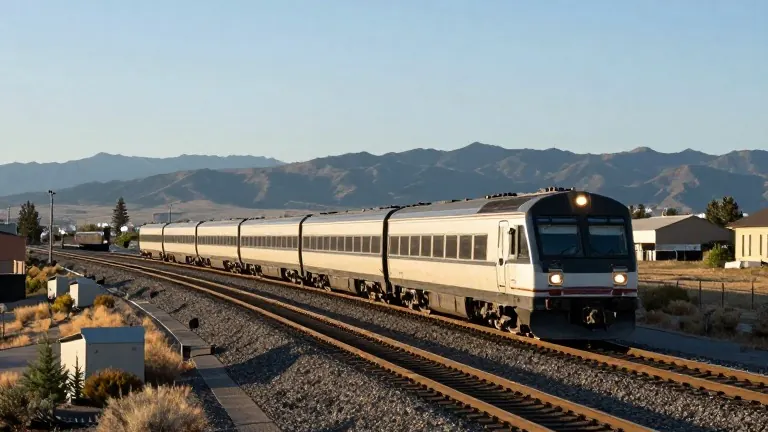
Ballot Measure 7A appears set to pass, with roughly 55% of the vote recorded for the measure as of Thursday afternoon. The measure authorizes a sales tax to fund the Colorado Connector, commonly known as the CoCo, a passenger rail line planned to run from Fort Collins to Pueblo.
The tax applies to voters within the Front Range Passenger Rail district. This geographic area extends from Fort Collins south through Loveland, Longmont, Boulder, Broomfield, Louisville, Westminster, Denver, Littleton, Sterling Ranch, Colorado Springs, and Pueblo. Residents in these areas will pay 33 cents for every $100 spent on taxable goods, with exceptions for food, gas, utilities, prescription drugs, and medical supplies.
James Flattum, director of outreach for the Coloradans for CoCo Campaign, expressed strong support for the result. He stated, “We are so excited. I think this is a project that there has been a concept of for generations. Finally, having a plan in place and critically having the voters say, ‘Yes.’” Flattum emphasized that the project builds on existing infrastructure rather than starting from scratch.
The Front Range Passenger Rail district plans to use existing tracks and maintain partnerships with BNSF and Union Pacific. Funding for initial operations will come from existing state revenue and FasTracks reserves, separate from the new tax. The district aims to launch starter service with three daily round trips between Denver and Fort Collins starting in 2029. Design work for this phase is scheduled for spring 2027, with construction beginning by 2028.
Revenue from Measure 7A will fund Phase 2 of the project. This phase targets the completion of the full corridor between Fort Collins and Pueblo by 2032. Flattum described this timeline as realistic due to the use of existing rail lines. The district will pay a fee to use the tracks, while capital investments from the tax will improve safety and reliability by adding double tracks and crossovers.
Robert Fleming, a voter in Boulder, acknowledged the financial impact of the new tax. He noted, “It’s a lot of money. I don’t know how many people are going to get use out of it, which is why I voted against it.” However, as a public transit advocate, he supported the initiative, stating, “If the majority want to give it a try, I’m in with them.”
The vote followed a boundary error discovered last month. The Front Range Passenger Rail district provided an incorrect map to the Colorado Secretary of State’s Office. This led to approximately 800,000 ballots being issued to voters in parts of Adams, Arapahoe, Douglas, and Weld counties who were not part of the district. The Secretary of State’s Office clarified that only eligible voters would have their votes counted in the contest.